


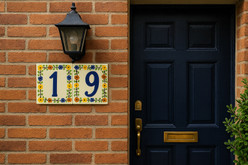
Talavera number tiles are one of the most charming and functional ways to personalize a home. Whether used to mark an address, enhance an entryway, or add a decorative accent to an exterior wall, these hand-painted tiles combine centuries of Mexican artistry with everyday practicality. Their vibrant colors, detailed motifs, and traditional glazing techniques make each tile an authentic piece of folk art—beautiful, durable, and instantly recognizable.
In this guide, we explore the history, craftsmanship, design possibilities, and real-world uses of Talavera number tiles. We also discuss why homeowners, designers, and architects choose them as an elevated alternative to mass-produced house numbers. If you want to explore the full collection, visit Talavera Number Tiles Collection, and if you need help choosing styles or placing a custom order, you may reach us at our contact page.
The Artistic Value of Talavera Number Tiles
Talavera number tiles are much more than decorative address markers—they are part of a long legacy of ceramic craftsmanship originating in central Mexico. These tiles are made using traditional clay, tin-glazed techniques, and hand-painted designs rooted in centuries of tradition. Each tile is shaped, dried, fired, glazed, painted, and refired by artisans who have mastered their craft through generations.
While modern address plaques are often mass-produced from vinyl, plastic, or metal, Talavera tiles stand out due to their handmade nature. You can see the subtle brushstrokes, intentional color variations, and the artisanal touch that no machine can replicate.
History of Mexican Tiles
The history of Mexican tiles is a story woven through Indigenous heritage, Spanish influence, and regional craftsmanship that has evolved over hundreds of years. Long before Spanish colonization, Indigenous cultures—including the Maya, Purépecha, and Zapotec—were already shaping clay into vessels, architectural ornaments, and ceremonial pieces. Their early ceramics demonstrated remarkable technical skill: precise geometric motifs, burnished surfaces, and advanced firing techniques that produced durable, richly colored pottery. These pre-Hispanic foundations would later become essential to the development of Mexican tile-making.
When Spanish artisans arrived in the 16th century, they brought tin-glazing, potter’s wheels, and new kiln technologies. These techniques blended with Indigenous methods, giving rise to what is now known as Talavera ceramics. Puebla and later Dolores Hidalgo became major centers of production, known for their brilliant cobalt blues, earthy reds, golden yellows, and intricate decorative borders. Tiles were used widely in colonial architecture—church façades, fountains, courtyards, kitchens, and public buildings—creating a distinctive visual identity that still defines many Mexican cities today.
Over time, Mexican tile artisans adapted these influences into new forms, including house number tiles, which combined practical utility with expressive design. Their decorative frames, hand-painted numerals, and vivid color palettes transformed simple address markers into pieces of art. Today, these tiles continue to be produced through the same artisanal processes, preserving centuries of cultural heritage. Each tile reflects not only the skill of the artisan but also the historical fusion of Indigenous and Spanish traditions that make Mexican ceramics globally admired.
Where Talavera Number Tiles Work Best
One of the greatest advantages of Talavera number tiles is their versatility. They can be installed indoors or outdoors and complement a wide range of architectural styles.
1. Home Entrances & Façades
Their bold readability and vibrant colors make them ideal for marking addresses on doors, gates, pillars, and exterior walls.
2. Garden Walls & Outdoor Structures
They bring warmth and charm to garden spaces, mailbox posts, pergola entrances, and fence columns.
3. Boutique Hotels, Restaurants & Businesses
Businesses with Southwestern, hacienda, or Spanish Revival themes often use Talavera tiles to add authenticity and visual appeal to their entries.
4. Interior Spaces
Indoors, they can highlight pantry doors, wine rooms, hallways, laundry rooms, and decorative niches.
Why Homeowners Prefer Talavera Number Tiles
- Durability: High-fire ceramic withstands sunlight, rain, and temperature changes.
- Readability: Deep cobalt numerals are easy to see from the street.
- Customization: Combine digits 0–9 to create any address or decorative sequence.
- Low Maintenance: Easy to clean and long-lasting.
- Authenticity: Hand-painted craftsmanship adds uniqueness to any home.
Installation Tips
For best results, install Talavera tiles using tile adhesive or thinset mortar on a clean, dry surface. Leave a small gap between tiles for alignment, and seal the grout if used outdoors. For removable installations, mount the tiles on a wooden or metal plaque that can be relocated or replaced easily.
Explore or Order Talavera Number Tiles
If you're ready to personalize your home with handcrafted address tiles, browse the full collection at: Talavera Number Tiles – Mexican Tile Store
If you need help selecting tiles, requesting bulk orders, or choosing a style that fits your home, please contact us at: Mexican Tile Store – Contact Us.
Talavera number tiles are more than address markers—they are cultural artifacts that bring charm, identity, and artistry to any space. Their durability, handcrafted beauty, and historical significance make them one of the most distinctive ways to decorate your home’s entrance or exterior walls.