


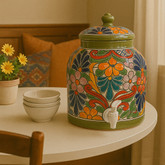
Talavera water crocks represent far more than functional ceramic vessels. They embody centuries of cultural heritage, artistic expression, and practical design rooted in daily life. Originally created to store and cool water in warm climates, these handcrafted pieces have evolved into refined decorative elements that seamlessly integrate into modern interiors. Their distinctive hand-painted surfaces, mineral-rich glazes, and traditional firing techniques continue to reflect the legacy of Mexican artisanship while offering enduring value in contemporary design contexts.
Understanding Talavera water crocks requires looking beyond their surface beauty. Their origins trace back to a fusion of indigenous Mexican pottery traditions and Spanish ceramic techniques introduced during the colonial period. Today, these crocks serve both as functional objects and as statement pieces, bridging past and present with remarkable authenticity. This article explores their historical roots, production process, material characteristics, and how they are thoughtfully implemented in today’s interior and architectural design.
Origins: The Historical Roots of Talavera Water Crocks
The history of Talavera ceramics begins in the 16th century, when Spanish artisans brought tin-glazed pottery techniques to Mexico, particularly to Puebla. These methods merged with pre-Hispanic ceramic traditions, creating a distinctive style known today as Talavera. Water crocks became an essential part of daily life, especially in regions where access to fresh water required storage solutions that could preserve temperature and purity.
These vessels were traditionally placed in shaded areas of homes, where their porous clay bodies allowed for slight evaporation, naturally cooling the water inside. This passive cooling method made Talavera crocks indispensable long before refrigeration existed. Over time, artisans began decorating these functional pieces with intricate motifs, transforming them into objects of pride within the household.
Designs often reflected cultural symbolism, incorporating floral patterns, geometric arrangements, and influences from Spanish, Moorish, and indigenous aesthetics. Each crock was unique, not only in its decoration but also in its slight variations in shape and glaze, reinforcing its handcrafted identity.
The Creation Process: Craftsmanship Behind Every Piece
Clay Selection and Preparation
The production of Talavera water crocks begins with carefully sourced natural clay. This clay is refined, filtered, and kneaded to achieve a consistent texture. The preparation stage is critical, as it determines the structural integrity and durability of the final piece.
Forming the Vessel
Artisans shape the crock using traditional methods, often on a potter’s wheel or through hand-molding techniques. The proportions are carefully balanced to ensure both functionality and aesthetic appeal. The rounded body allows for optimal water storage, while the neck and opening are designed for ease of use.
First Firing
Once shaped, the crock undergoes an initial firing at high temperatures. This process hardens the clay, creating a stable base for glazing and decoration. The result is a durable ceramic form ready for artistic detailing.
Hand-Painted Decoration
The defining characteristic of Talavera lies in its hand-painted designs. Using mineral-based pigments, artisans apply intricate patterns directly onto the surface. Each brushstroke is deliberate, requiring years of experience to achieve precision and consistency.
Common colors include cobalt blue, deep yellow, green, and terracotta, all derived from natural oxides. These pigments interact with the glaze during the second firing, producing the rich, vibrant finishes associated with authentic Talavera.
Glazing and Final Firing
A tin-based glaze is applied to seal the surface, giving Talavera its characteristic glossy finish. The crock is then fired again at high temperatures, fusing the glaze and pigments permanently to the ceramic body. This step not only enhances visual appeal but also ensures the piece is suitable for functional use.
Material Qualities and Functional Advantages
Talavera water crocks are valued not only for their visual appeal but also for their practical performance. The ceramic body provides natural insulation, helping maintain cooler water temperatures. The glazed interior ensures that the crock is hygienic and suitable for storing drinking water.
Unlike mass-produced alternatives, each Talavera crock retains subtle variations that reflect its handmade origin. These variations are not imperfections but rather indicators of authenticity, reinforcing the connection between the artisan and the final product.
Durability is another key advantage. When properly cared for, Talavera ceramics can last for decades, making them both a functional investment and a collectible piece of cultural artistry.
Design Evolution: From Utility to Decorative Focal Point
While Talavera water crocks were originally designed for practical use, their role has expanded significantly in modern design. Today, they are often used as decorative accents in kitchens, dining areas, patios, and even commercial spaces such as restaurants and boutique hotels.
Their bold patterns and vibrant colors make them natural focal points, capable of anchoring a design scheme or adding contrast to neutral environments. Whether placed on a wooden stand or integrated into a custom-built station, these crocks introduce texture and cultural depth to a space.
Designers frequently use Talavera crocks to complement Spanish Colonial, Mediterranean, and Hacienda-style interiors. However, they also work surprisingly well in contemporary settings, where their handcrafted nature contrasts with clean architectural lines.
Modern Applications in Interior and Architectural Design
Kitchen Integration
In modern kitchens, Talavera water crocks can serve both functional and decorative purposes. Positioned on countertops or dedicated stands, they provide a visually engaging alternative to conventional water dispensers. Their artisanal character enhances the warmth of the kitchen environment.
Outdoor Living Spaces
Patios, courtyards, and garden areas benefit greatly from the inclusion of Talavera crocks. Their durability makes them suitable for outdoor use, while their colors complement natural materials such as stone, wood, and terracotta.
Hospitality and Commercial Spaces
Restaurants and boutique hotels often incorporate Talavera crocks as part of their design narrative. These pieces contribute to an authentic atmosphere, reinforcing a connection to cultural heritage while offering guests a memorable visual experience.
Decorative Styling
Even when not used for water storage, Talavera crocks can function as standalone decorative elements. They can be styled with dried branches, placed in entryways, or used as sculptural accents within curated interiors.
The Value of Authentic Craftsmanship
Authentic Talavera water crocks are produced under strict guidelines that preserve traditional methods. Skilled artisans dedicate years to mastering the techniques required to create these pieces, ensuring that each crock meets high standards of quality and authenticity.
Supporting handmade Talavera means investing in a product that carries cultural significance and artisanal integrity. It also helps sustain traditional crafts that have been passed down through generations.
In an era dominated by mass production, the value of handcrafted ceramics lies in their individuality. Each Talavera crock tells a story—of materials, technique, and cultural heritage—making it far more than a decorative object.
Choosing the Right Talavera Water Crock
When selecting a Talavera water crock, it is important to consider both aesthetic and functional factors. Size, pattern, and color should align with the intended space, while the craftsmanship should reflect attention to detail and authenticity.
For those seeking a curated selection of handcrafted options, you can explore our Talavera water crocks to find pieces that balance tradition with refined design.
Each crock offers a unique combination of artistry and functionality, making it suitable for a variety of applications, from daily use to decorative display.
Integrating Tradition into Contemporary Living
Incorporating Talavera water crocks into modern interiors is not simply a design choice—it is a way of connecting with a rich cultural tradition. These pieces introduce warmth, texture, and authenticity into spaces that might otherwise feel uniform or impersonal.
Their versatility allows them to adapt to different design styles, from rustic to contemporary. Whether used as a functional water vessel or as a decorative accent, Talavera crocks contribute a sense of craftsmanship that cannot be replicated by industrial products.
Conclusion: A Living Tradition in Every Space
Talavera water crocks represent a rare combination of history, craftsmanship, and practical design. From their origins as essential household items to their role as modern decorative statements, they continue to evolve while maintaining their cultural roots.
Choosing a Talavera crock means embracing a piece of living history—one that enhances both the functionality and aesthetic of a space. For those interested in incorporating this timeless element into their home or project, you can get in touch with our team for guidance and personalized recommendations.
By integrating Talavera into contemporary design, you not only elevate your space but also support a tradition that has endured for centuries. The result is a meaningful addition that combines beauty, authenticity, and lasting value.