


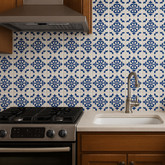
Talavera tiles are widely recognized for their vibrant patterns and handcrafted beauty, but one of their most important technical characteristics is often overlooked: thickness. Typically, Talavera tiles have a thickness of approximately 1/4 inch (8–10 mm). While this may seem like a precise specification, it is important to understand that slight variations within this range are not only normal but also a defining feature of authentic handmade ceramics.
Unlike machine-made tiles that are produced with strict uniformity, Talavera tiles are shaped, finished, and fired by hand. This artisanal process introduces subtle differences in thickness from one tile to another. Rather than being considered a flaw, these variations contribute to the depth, texture, and individuality that make Talavera tiles so distinctive in both traditional and modern design applications.
Standard Thickness: What to Expect
Talavera tiles generally fall within a thickness range of approximately 1/4 inch (8–10 mm). This measurement provides a balance between durability and ease of installation, making the tiles suitable for a wide variety of applications, including backsplashes, accent walls, stair risers, and decorative surfaces.
However, it is important to note that this is an approximate range, not a fixed specification. Because each tile is made individually, minor deviations in thickness are expected. These differences are typically small, but they play a significant role in the overall visual and tactile quality of the installation.
Why Thickness Variations Occur
The variation in thickness is directly related to the handmade nature of Talavera tiles. Each stage of the production process introduces variables that influence the final dimensions of the tile.
Hand Forming the Clay
Talavera tiles are shaped using molds or hand-forming techniques. Even when molds are used, the amount of clay pressed into each form can vary slightly. This results in small differences in thickness before the tile even begins the drying process.
Natural Drying Process
Once formed, the tiles are left to dry naturally. During this stage, moisture evaporates from the clay, causing it to shrink. Environmental factors such as temperature and humidity affect how quickly and evenly this shrinkage occurs, which can influence the final thickness of each tile.
Kiln Firing Variations
The tiles are fired in kilns at high temperatures, often more than once. Heat distribution within the kiln is not perfectly uniform, and slight differences in firing conditions can cause variations in how each tile settles and solidifies. This contributes to minor dimensional differences, including thickness.
Glazing and Surface Application
The application of glaze adds another variable. While the glaze layer is relatively thin, it can slightly affect the perceived thickness and surface profile of the tile. Because glaze is applied by hand, its distribution may vary from tile to tile.
The Role of Thickness in Design and Installation
These natural variations in thickness create a surface that feels organic and visually dynamic. When installed, Talavera tiles do not produce a perfectly flat, uniform plane. Instead, they create subtle shifts in light and shadow, enhancing the depth and character of the design.
From an installation perspective, experienced installers understand how to work with these variations. Adjustments in mortar thickness allow the surface to be leveled while still preserving the handcrafted appearance of the tiles. This process ensures both structural integrity and aesthetic consistency.
Rather than trying to eliminate variation, the goal is to manage it in a way that highlights the unique qualities of the material.
Handmade Variation as a Mark of Authenticity
In the context of Talavera, variation is not a defect—it is a signature of authenticity. Each tile reflects the conditions under which it was made, the materials used, and the artisan’s hand. These factors combine to create a product that cannot be replicated through industrial manufacturing.
The slight differences in thickness contribute to the individuality of each tile. When viewed collectively, these variations produce a surface that feels alive, with subtle movement and texture that change depending on lighting and perspective.
This is what sets Talavera apart from mass-produced alternatives. It is not designed to be identical—it is designed to be expressive.
The Creation Process Behind Talavera Tiles
Clay Selection and Preparation
The process begins with natural clay that is carefully selected and refined. The clay is cleaned and kneaded to achieve the proper consistency, ensuring that it can be shaped effectively while maintaining strength after firing.
Tile Formation
Artisans shape each tile individually, using molds or hand-forming techniques. This stage determines the basic dimensions of the tile, including its approximate thickness.
Drying and First Firing
The tiles are air-dried before undergoing their first kiln firing. This step hardens the clay and prepares it for decoration. The combination of drying and firing introduces natural variations in size and thickness.
Hand-Painted Decoration
Designs are applied using mineral-based pigments. Each tile is painted by hand, ensuring that no two pieces are exactly alike. This stage emphasizes the artistic aspect of Talavera production.
Glazing and Final Firing
A tin-based glaze is applied to create the characteristic glossy finish. The tiles are then fired again, permanently setting the design and surface. This final step completes the transformation from raw clay to finished ceramic tile.
Embracing Variation in Modern Spaces
In contemporary design, there is a growing appreciation for materials that reflect craftsmanship and authenticity. Talavera tiles align perfectly with this approach, offering a balance between tradition and modern aesthetics.
The slight variations in thickness enhance the tactile quality of surfaces, making them more engaging and visually interesting. Whether used in kitchens, bathrooms, or outdoor spaces, these tiles introduce a level of detail that cannot be achieved with uniform materials.
Designers often use Talavera tiles to create focal points, where their handcrafted nature becomes a defining feature of the space. The variation in thickness contributes to this effect, adding depth and dimension to the overall composition.
Working with Authentic Talavera Tiles
When selecting Talavera tiles, it is important to approach the material with an understanding of its handmade nature. Expect variation, and view it as an asset rather than a limitation.
You can explore our collection of Mexican tiles to find designs that align with your project’s vision and aesthetic goals.
If you have questions about thickness, installation, or selecting the right tile for your space, we invite you to contact our team. We are available to provide guidance and help you make informed decisions based on your specific needs.
Conclusion: Thickness as Part of the Story
The approximate thickness of Talavera tiles—around 1/4 inch (8–10 mm)—is more than just a technical detail. It is a reflection of the handmade process that defines these ceramics. The variations within this range are not inconsistencies but expressions of craftsmanship, material behavior, and traditional production methods.
By understanding and embracing these variations, you gain a deeper appreciation for the artistry behind each tile. The result is a finished space that feels authentic, textured, and uniquely crafted—qualities that cannot be replicated by machine-made materials.