


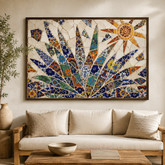
From Fragments to Art: The Decorative Potential of Broken Mexican Talavera Tiles
Broken Mexican Talavera tiles demonstrate how fragments can become something more expressive than the original surface they came from. Their irregular edges, hand-painted patterns, vivid glazes, and natural variations make them an exceptional material for mosaics and creative home décor. Instead of depending on the orderly repetition of full-size tiles, broken Talavera allows homeowners, designers, and artisans to compose surfaces piece by piece, turning color and pattern into a highly individual form of decorative art.
This creative potential extends throughout the home and into outdoor living spaces. Broken Talavera can transform tabletops, backsplashes, planters, stair risers, mirrors, fountains, benches, garden walls, and architectural accents. Small fragments can follow curves, fill irregular spaces, or be combined into elaborate compositions that would be difficult to achieve with conventional tiles.
Most importantly, every fragment preserves something of its handmade origin. A brushstroke, floral detail, geometric line, or field of cobalt blue becomes part of a completely new composition, giving broken Mexican Talavera an artistic life of its own.
Why Broken Talavera Is More Than Leftover Tile
The decorative value of broken Talavera begins with a change in perspective. A fragment does not need to display an entire original pattern to be beautiful. Once incorporated into a mosaic, the fragment becomes a shape, color, texture, and visual element within a larger composition.
A small section of a flower might sit beside a geometric border. A cobalt fragment may provide contrast against yellow and white pieces. A curved section of painted decoration can become part of an abstract arrangement that bears little resemblance to the original tile.
This transformation is what makes broken Talavera so interesting for creative projects. The material is no longer restricted by the original square format or repeating pattern. It can be rearranged according to the dimensions, architecture, and personality of the new surface.
The Artistic Character of Handmade Mexican Talavera
Talavera is particularly well suited to mosaic work because the tiles already possess strong artistic character before they are broken. Handmade production creates slight variations in brushwork, glaze, dimensions, pattern placement, and color intensity.
These characteristics become even more noticeable when fragments from multiple tiles are placed beside one another. A series of blue pieces may reveal several subtle shades rather than one mechanically identical color. Painted lines may differ slightly in thickness, and individual sections of glaze can reflect light differently.
These variations are not manufacturing errors. They are inherent characteristics of artisan ceramic production and an important part of Talavera's uniqueness. In mosaic design, they become assets that create depth and visual movement.
How Fragments Create a New Visual Language
A conventional tile installation depends heavily on alignment. Straight grout lines, repeated patterns, and consistent dimensions establish order across the surface. Broken tile mosaics replace that grid with a more fluid structure.
Individual pieces can be rotated, repositioned, grouped by color, or separated by contrasting fragments. The grout lines become part of the design, tracing irregular pathways between ceramic pieces.
This creates a different visual language—one based on composition rather than repetition. The installer or designer effectively becomes a mosaic artist, deciding how each fragment contributes to the larger surface.
The result can range from controlled and geometric to spontaneous and highly expressive.
Creating Artistic Kitchen Backsplashes
Kitchen backsplashes provide an ideal setting for broken Talavera because they combine practical surface coverage with a highly visible design opportunity. A mosaic can extend across the entire backsplash or be concentrated behind the range, sink, or preparation area.
For a sophisticated composition, fragments can be selected around two or three dominant colors. Cobalt blue and white create a classic ceramic palette, while adding yellow or terracotta introduces additional warmth.
For a more eclectic kitchen, many different Talavera patterns can be mixed together. Floral, geometric, and traditional motifs become interconnected through the irregular mosaic arrangement.
Natural wood cabinetry, stone countertops, copper, iron, and simple plaster walls provide particularly effective backgrounds for these colorful ceramic compositions.
Turning a Table into Functional Mosaic Art
A tabletop offers one of the clearest examples of how broken tile fragments can become functional artwork. Rather than replacing an older table, its surface can be redesigned with a custom Talavera mosaic.
The fragments can be arranged randomly or organized into a deliberate composition. A border might frame the perimeter, while mixed pieces create a colorful center. Round tables can incorporate radial patterns, while rectangular tables can use bands, geometric divisions, or central medallions.
Because every arrangement is assembled individually, the completed tabletop is essentially one of a kind. Even if another person uses the same selection of broken tiles, the final pattern will naturally be different.
This makes mosaic tabletops particularly appealing for dining areas, patios, covered terraces, breakfast spaces, and decorative side tables.
Giving Old Furniture a New Identity
Broken Talavera can extend beyond tabletops to other suitable furniture surfaces. Console tables, benches, serving stations, outdoor bars, and decorative cabinets can incorporate ceramic mosaic panels.
The tile does not need to cover the entire piece. A small inset can be enough to transform otherwise simple furniture into a distinctive decorative element.
This approach is particularly effective when working with wood or metal furniture because the contrast between materials emphasizes the handmade ceramic surface.
Rather than discarding a structurally sound piece because its surface is worn or visually outdated, a Talavera mosaic can give it a completely new decorative identity.
Transforming Stair Risers into a Gallery of Pattern
Staircases naturally create a sequence of individual surfaces, making them ideal for artistic experimentation. Broken Talavera mosaics can be installed on stair risers to create a progression of color and pattern as the staircase rises through the home.
Each riser can use a different combination of fragments while maintaining a consistent palette. Alternatively, a broader mosaic composition can appear to flow visually from one step to the next.
This application works especially well in Spanish Revival, Hacienda, Mediterranean, rustic, and eclectic interiors, but it can also create an unexpected artistic contrast in contemporary homes.
Because staircases are architectural transition zones, decorative risers help turn movement through the home into a visual experience.
Creating Handmade Mirror Frames
A simple mirror can become a decorative focal point when framed with broken Talavera. The irregular ceramic pieces create a handcrafted border that draws attention to the mirror without requiring a conventional wood or metal frame.
This technique works particularly well in bathrooms and powder rooms, where the ceramic material can coordinate with a Talavera sink or backsplash.
A predominantly blue-and-white frame can feel refined and traditional, while a multicolored composition creates a more energetic statement. Narrow frames keep the treatment subtle, while wider mosaic surrounds turn the mirror into an architectural feature.
Decorative Wall Panels and Mosaic Artwork
Broken Talavera does not always need to be permanently installed across a wall. Fragments can also be assembled into decorative mosaic panels that function much like conventional artwork.
These panels can be abstract, geometric, floral, or inspired by recognizable imagery. They can incorporate fragments from many different patterns or focus on a carefully controlled palette.
Once completed, the mosaic becomes a standalone artistic object that can be displayed in an entryway, kitchen, courtyard, covered patio, or other suitable location.
This approach is particularly useful for smaller quantities of broken tile because even a modest collection of fragments can become a meaningful decorative composition.
Bringing Art into the Garden
Gardens provide an especially natural setting for colorful Talavera mosaics. Ceramic fragments contrast beautifully with plants, soil, stone, wood, and other organic materials.
Broken tiles can decorate planters, garden walls, benches, decorative panels, and selected architectural features. The reflective quality of glazed ceramics also interacts with natural sunlight, making colors appear more vivid at different times of day.
Instead of treating garden structures as purely functional elements, Talavera allows them to participate in the overall artistic composition of the landscape.
Colorful Mosaic Planters
Planters are an excellent starting point for anyone interested in experimenting with broken Talavera. Appropriate stable planter surfaces can be decorated with individual fragments, transforming simple containers into colorful garden features.
The mosaic can cover the entire exterior or appear as a decorative band. Several planters can share the same dominant colors while using different patterns, creating coordination without exact repetition.
Plants themselves become part of the composition. Green foliage can intensify cobalt and yellow ceramics, while flowering plants can echo colors already present in the Talavera patterns.
Fountains and the Visual Relationship with Water
Talavera has a natural visual connection with fountains and courtyard water features. Blue and white ceramic fragments reinforce the appearance of water, while warmer colors create contrast against the reflective surface.
Broken pieces are particularly useful around curved architectural forms because smaller fragments can follow contours more easily than standard square tiles.
They can be incorporated into decorative fountain walls, surrounding panels, or other suitable surfaces. Installations that are continuously submerged or exposed to substantial moisture require appropriate waterproofing, setting materials, grout, and professional installation methods.
Creating Colorful Garden Benches
Built-in masonry benches can become permanent works of decorative art with the addition of Talavera mosaics. The vertical front or backrest can be covered with broken fragments while other surfaces remain simple.
This creates an architectural feature that combines seating with artistic expression. A bench positioned near plants, a fountain, or a courtyard wall can also help connect multiple decorative elements within the landscape.
For a more restrained design, the mosaic can be limited to a narrow band or central panel rather than covering the entire structure.
Adding Personality to Outdoor Kitchens
Outdoor kitchens often rely heavily on stone, concrete, stucco, and stainless steel. Although practical, these materials can create an environment that feels visually heavy without decorative contrast.
A broken Talavera backsplash or mosaic panel can introduce color and artisan texture into the cooking area. The ceramic fragments can be coordinated with nearby planters, patio furniture, or architectural accents to integrate the outdoor kitchen with the surrounding space.
For heat-adjacent surfaces, the installation should be evaluated according to the specific appliance, clearance requirements, substrate, and expected temperatures.
Using Broken Talavera Around Architectural Niches
Niches provide a naturally framed location for decorative mosaics. Because the surface area is relatively small, even a limited quantity of broken tile can create substantial visual impact.
The back wall of a niche can be filled with colorful fragments while the surrounding architecture remains neutral. This contrast emphasizes both the depth of the niche and the handmade character of the ceramic.
Niches in bathrooms, kitchens, hallways, courtyards, and covered exterior spaces can all become small showcases for Talavera craftsmanship.
Designing with Color Rather Than Complete Patterns
One of the most liberating aspects of broken tile is that the original pattern no longer needs to remain recognizable. A fragment can be selected simply because of its color.
This allows the designer to treat Talavera almost like a painter treats pigment. Blue fragments can create one area, yellow pieces another, while white sections provide visual breathing room.
Pieces containing partial flowers, lines, leaves, or geometric motifs then introduce unexpected details throughout the composition.
Thinking about color first can make it easier to combine fragments from many different original tile designs successfully.
Mixing Patterns Without Losing Visual Balance
Mixing Talavera patterns is one of the greatest opportunities offered by broken tiles, but a successful composition still requires balance. Random placement does not necessarily mean unplanned placement.
Before installation, fragments can be spread across a large surface and organized according to color, size, and visual complexity. Larger pieces can serve as anchors while smaller fragments connect the surrounding areas.
Highly detailed pieces can be balanced with simpler sections of color. Similar fragments can be distributed rather than clustered together. This gives the final mosaic variety while preventing one area from becoming visually heavier than another.
The Role of Grout in Mosaic Art
Grout is more visually significant in broken tile mosaics than in standard installations because irregular fragments create varying spaces between pieces.
A lighter grout can visually separate colorful fragments and make each shape more distinct. A darker grout can create stronger outlines and emphasize the geometry of the mosaic. A neutral tone can help unify an installation containing many colors and patterns.
For this reason, grout should be considered part of the artistic composition rather than simply a technical necessity.
Planning a Broken Talavera Installation
Before permanent installation begins, the fragments should be arranged temporarily whenever practical. This allows the overall distribution of color and pattern to be evaluated before adhesive is applied.
The surface itself must also be appropriate for tile. It should be stable, properly prepared, and capable of supporting the intended installation. Different environments may require different substrates, membranes, adhesives, grout, or waterproofing systems.
Wet areas, outdoor installations, countertops, pools, fountains, and surfaces exposed to significant heat should be evaluated by an experienced tile professional. Proper installation is essential to preserving both the appearance and performance of the finished mosaic.
Why Imperfection Is Central to the Design
Broken Talavera celebrates a concept that is fundamental to handmade design: visual interest does not require mechanical perfection. Irregular edges, varying fragments, subtle color differences, and individual brushstrokes are precisely what give the finished mosaic character.
The original tiles themselves may already show small variations because of hand painting, glazing, firing, and artisan production. Breaking them into fragments does not remove those qualities. Instead, it allows them to interact in new ways.
The finished mosaic becomes a collection of differences held together by composition, color, and craftsmanship.
From Traditional Material to Personal Expression
Talavera is rooted in Mexican ceramic tradition, but broken tile mosaics demonstrate how traditional materials can support highly personal design. Homeowners are not limited to reproducing historic patterns or established layouts.
The fragments can be arranged according to the architecture, color palette, and personality of a specific home. A minimalist composition might use mostly blue and white pieces, while an expressive courtyard could combine nearly every available color.
This ability to reinterpret a traditional craft is part of what keeps Talavera relevant in contemporary design.
Explore Mexican Talavera for Creative Projects
Broken Talavera tiles provide an opportunity to create something that cannot be reproduced exactly. The combination of handmade ceramic variation and individual mosaic composition means every backsplash, table, planter, wall, or decorative feature develops its own identity.
You can explore Mexican Tile Store for Talavera products and inspiration for colorful ceramic projects throughout the home and garden.
If you have questions about Talavera products, availability, or ideas for a particular project, you can contact our team for additional assistance.
Conclusion: Giving Ceramic Fragments a New Artistic Purpose
Broken Mexican Talavera tiles reveal the creative possibilities hidden within irregular materials. A fragment that no longer functions as a complete patterned tile can become part of a backsplash, tabletop, mirror, staircase, planter, fountain, garden bench, or original mosaic artwork.
The beauty comes from transformation. Individual pieces of color and pattern are rearranged into a new composition, while the hand-painted details and natural variations of the original ceramics remain visible. Instead of concealing irregularity, mosaic design celebrates it.
For homeowners and designers seeking decorative surfaces with authentic craftsmanship and genuine individuality, broken Talavera offers remarkable artistic freedom. From fragments that appear unrelated at first comes an entirely new work of art—one shaped by Mexican ceramic tradition, creative vision, and the unique character of every handmade piece.