


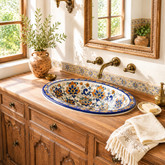
How to Clean and Care for a Hand Painted Oval Talavera Sink
A hand painted oval Talavera sink is both a functional bathroom fixture and a piece of decorative ceramic art. Its glazed surface, intricate patterns, and handmade character can remain beautiful for years when cleaned with the right products and maintained with appropriate care. Because Talavera sinks are created by artisans rather than industrially printed and mass-produced, they deserve a maintenance routine that protects the glaze and respects the individuality of the ceramic.
Fortunately, caring for a Talavera sink is not complicated. The most important principles are simple: use gentle cleaners, avoid abrasive tools, rinse away residue, and prevent harsh chemicals from sitting on the surface. Regular maintenance is usually more effective than aggressive deep cleaning. Understanding the nature of the ceramic also helps homeowners distinguish normal handmade variation from actual wear.
This guide explains how to clean a hand painted oval Talavera sink safely, which products to avoid, how to manage common bathroom residue, and what habits can help preserve its color, glaze, and artisan character over time.
Why Talavera Sinks Need Gentle Care
Talavera bathroom sinks are created from ceramic clay that is shaped, decorated, glazed, and kiln-fired. The glaze provides the smooth, glossy surface seen on the finished basin and helps protect the painted decoration beneath it.
Although fired ceramic is durable, the decorative surface should still be treated thoughtfully. Harsh abrasive powders, stiff scouring pads, and aggressive chemical cleaners can unnecessarily wear or dull surfaces over time.
A gentler routine is usually sufficient because most bathroom buildup consists of soap residue, toothpaste, cosmetics, water spots, and everyday dirt rather than heavy grease or industrial contamination.
Start with Regular Light Cleaning
The easiest way to keep an oval Talavera sink looking beautiful is to clean it frequently rather than allowing residue to accumulate. A quick wipe after normal use can substantially reduce the need for stronger cleaning later.
For routine maintenance, use warm water, a soft cloth or nonabrasive sponge, and a mild liquid soap. Gently wipe the interior bowl, rim, and visible exterior areas.
After cleaning, rinse the sink thoroughly with clean water so no soap film remains on the glaze. A soft towel can then be used to dry the surface if you want to minimize water spotting.
This basic routine is appropriate for most day-to-day cleaning.
Use Mild Soap Instead of Aggressive Cleaners
A mild dishwashing liquid or gentle household soap is generally adequate for routine Talavera sink care. The goal is to loosen residue without exposing the ceramic surface to unnecessary chemicals.
Apply a small amount of diluted soap to a damp cloth or soft sponge rather than pouring concentrated cleaner directly across the basin. Work gently over the surface, paying extra attention around the drain and overflow opening where residue may accumulate.
Rinse thoroughly afterward. Leaving cleaning products on the ceramic surface is rarely beneficial and can create film or streaking.
Avoid Abrasive Scrubbing Tools
One of the most important care rules is to avoid aggressive scrubbing. Steel wool, metal brushes, abrasive scouring pads, and similar tools are unnecessary for normal ceramic sink maintenance.
These products can create fine surface scratches or reduce the shine of the glaze. Once a glossy finish has been physically abraded, ordinary cleaning will not restore it easily.
Soft microfiber cloths, nonabrasive sponges, and other gentle cleaning tools are better suited to a hand painted Talavera sink.
Be Careful with Abrasive Powders
Powdered cleaners often contain abrasive particles designed to scour difficult stains. While useful on some surfaces, they are generally unnecessary for a decorative glazed sink.
The problem is not simply chemical composition. Repeated physical friction from abrasive particles can gradually change the surface finish.
For most Talavera bathroom sinks, mild liquid products are the better choice. If ordinary cleaning does not remove a particular residue, identify the type of buildup before moving to a stronger solution rather than immediately reaching for an abrasive powder.
Cleaning Toothpaste and Soap Residue
Toothpaste and soap are among the most common forms of bathroom sink buildup. When left to dry repeatedly, they can create cloudy areas around the drain, faucet zone, or lower portion of the bowl.
Warm water usually softens this residue. Wet the area first, allow the moisture to loosen the buildup briefly, and then wipe gently with mild soap and a soft cloth.
Avoid scraping dried toothpaste with metal objects or other hard tools. Allowing water to soften the material is safer and usually easier.
Managing Water Spots
Water spots are particularly visible on glossy ceramic surfaces, especially in areas with mineral-rich water. They are usually cosmetic and do not mean that the Talavera itself is damaged.
The simplest preventive measure is drying the sink after use with a soft towel. This is not mandatory after every use, but it can substantially reduce visible spotting in homes with hard water.
For light mineral residue, begin with warm water and mild soap. Repeated gentle cleaning is preferable to aggressive scrubbing.
Hard Water Requires Consistent Maintenance
Hard water contains dissolved minerals that can remain behind after water evaporates. Over time, these deposits may accumulate around drains, faucet areas, overflow openings, and portions of the basin where water tends to sit.
The best strategy is prevention. Regular rinsing and drying reduce the amount of mineral residue that has an opportunity to build up.
If your home has particularly hard water, cleaning the sink more frequently with a soft cloth is often easier than trying to remove thick deposits after they have formed.
Avoid Leaving Strong Chemicals in the Basin
Bathroom cleaning products can contain bleach, acids, solvents, or other aggressive ingredients. These products may be intended for shower grout, toilets, drains, or other surfaces and should not automatically be assumed suitable for a hand painted ceramic sink.
Do not allow strong household chemicals to sit in the Talavera basin for extended periods. If a chemical product is accidentally spilled, rinse the area thoroughly with clean water.
The same caution applies to hair coloring products, strong cosmetics, nail products, and other chemical substances frequently used in bathrooms.
Do Not Use the Sink as a Mixing Bowl for Cleaners
A decorative sink should not be used as a container for mixing cleaning solutions, soaking metal tools, or combining chemicals. Some mixtures can be harmful not only to the sink but also to the person using them.
Clean the sink itself using a controlled amount of appropriate cleaner, then rinse it. This keeps maintenance simple and avoids unnecessary chemical exposure.
How to Clean Around the Drain
The drain area often requires more attention because water, soap, toothpaste, and small amounts of debris naturally collect there. Use a soft cloth or small nonabrasive brush to clean gently around the drain perimeter.
If the drain hardware can be cleaned separately according to its manufacturer's instructions, do so without allowing aggressive metal-cleaning products to remain on the ceramic.
Different drain finishes may require different care. Brass, chrome, bronze, and other decorative metals should therefore be maintained according to the hardware manufacturer rather than treated exactly like the Talavera surface.
Caring for the Overflow Opening
Many Talavera bathroom sinks include an overflow opening, which provides an additional path for water when the basin fills above a certain level. This area should also be kept clean.
Soap residue and debris can accumulate around the visible opening. Clean the accessible ceramic area with mild soap and a soft cloth or suitable small brush.
Avoid forcing hard tools into the overflow channel. If there is a drainage problem inside the plumbing system, it is better to have the installation evaluated appropriately rather than attempting to scrape or probe the internal channel aggressively.
Cleaning the Exterior Surface
Depending on how the oval sink is installed, part of its exterior may remain visible. Vessel-style installations in particular can expose decorative surfaces that are easy to overlook during normal cleaning.
Use the same gentle method on these areas: warm water, mild soap, and a soft cloth. Wipe beneath the rim and around areas where the sink meets the countertop, paying attention to moisture or cosmetic residue.
Keeping the visible exterior clean helps the entire vanity retain a polished appearance.
Protecting the Hand-Painted Design
The painted pattern is one of the defining features of a Talavera sink. After glazing and firing, the design becomes part of the ceramic finish rather than simply sitting on the surface like ordinary paint.
Even so, preserving the glaze protects the appearance of the artwork. Gentle cleaning reduces unnecessary surface abrasion and helps maintain the reflective quality that gives Talavera colors their depth.
There is no need to polish the painted ceramic aggressively. Routine washing and careful drying are usually enough to keep the design visually vibrant.
Handmade Variations Are Not Stains or Damage
It is important to understand that an artisan Talavera sink may display slight variations in color, brushstroke, glaze, pattern alignment, surface texture, or dimensions. These characteristics are natural results of handmade production.
A darker blue brushstroke, a slightly different line thickness, or variation in glaze should not automatically be interpreted as something that needs to be scrubbed away.
Aggressive cleaning aimed at eliminating normal artisan variation can do more harm than good. Familiarity with the original appearance of the sink helps homeowners distinguish craftsmanship from actual dirt or buildup.
Why Talavera Colors Can Vary Slightly
Color variation begins during production. Mineral pigments are applied by hand, and the final appearance develops during kiln firing. Differences in pigment application, glaze, heat, and placement in the kiln can influence the finished tone.
This means two sinks produced in the same design may not have perfectly identical colors. The same principle applies to tiles and other handmade Talavera products.
These subtle differences are part of the uniqueness of artisan ceramics and contribute to the reason each finished sink feels individual.
Protect the Sink from Hard Impacts
Ceramic sinks are intended for normal bathroom use, but they should still be protected from unnecessary impact. Heavy metal grooming tools, glass containers, or other hard objects can potentially chip ceramic if dropped with enough force.
Avoid storing particularly heavy or sharp objects directly above the basin where they could fall. This is especially relevant for wall-mounted cabinets and shelves positioned over the vanity.
Careful everyday use is one of the simplest ways to preserve the sink long term.
Be Careful with Jewelry and Metal Objects
Rings, watches, grooming tools, and metal containers can strike the basin during normal use. A single light contact is unlikely to be significant, but repeated hard contact should be avoided.
Place jewelry and accessories on the countertop rather than dropping them into the sink. This also reduces the possibility of small objects entering the drain.
Do Not Expose the Sink to Extreme Temperature Shock
As a general ceramic-care practice, avoid unnecessarily subjecting the basin to abrupt extreme temperature changes. Normal hot and cold bathroom water is part of routine use, but pouring extremely hot liquids into a very cold ceramic basin is unnecessary.
Consistent normal bathroom use is preferable to exposing any ceramic fixture to unusual thermal stress.
Keep the Countertop-Sink Joint Clean
For drop-in or other installations where part of the sink meets the countertop, the joint deserves periodic inspection and cleaning. Moisture, cosmetics, soap, and dust can collect along this transition.
Wipe the area gently without digging into sealant with sharp tools. If the installation sealant shows deterioration, separation, or persistent moisture infiltration, it should be evaluated and maintained as an installation issue rather than treated with stronger cleaning chemicals.
Cleaning a Talavera Sink in a Guest Bathroom
Guest bathrooms may be used less frequently, which can make them easier to maintain, but they should not be ignored for long periods. Water remaining in the basin after occasional use can still leave spots.
A quick inspection and gentle wipe during regular household cleaning is usually enough. Because decorative Talavera sinks often serve as focal points in guest baths and powder rooms, keeping the glaze clean has a disproportionate effect on the appearance of the entire room.
Daily Care Does Not Need to Be Complicated
A Talavera sink should not feel like a delicate museum object that requires constant attention. It is a functional bathroom fixture designed for everyday use.
The most effective maintenance routine is also the simplest: rinse obvious residue, use mild soap when needed, wipe with a soft cloth, and avoid harsh cleaners or abrasive tools.
Consistency matters more than aggressive cleaning.
A Simple Weekly Cleaning Routine
For many households, a weekly cleaning routine is sufficient to keep a Talavera bathroom sink attractive. Begin by rinsing the basin with warm water. Apply a small amount of mild soap to a soft sponge or cloth and wipe the interior, rim, overflow area, and accessible exterior surfaces.
Clean around the drain carefully, then rinse all soap away. Finish by drying the sink with a soft towel if water spotting is a concern.
If residue is still visible, repeat the gentle process rather than immediately switching to an abrasive product.
What to Avoid on a Hand Painted Talavera Sink
Good care often depends as much on what you avoid as on what you use. Steel wool, metal scrapers, highly abrasive sponges, scouring powders, and unnecessarily aggressive chemicals should not be part of routine Talavera maintenance.
Avoid leaving dyes, solvents, concentrated cleaning products, or unknown chemicals standing in the basin. Do not use sharp tools to remove buildup from the ceramic surface.
When uncertain about a cleaner, using warm water and mild soap is generally the safer starting point.
Maintaining the Surrounding Vanity
A Talavera sink often sits within a vanity made from wood, stone, tile, or another decorative material. Those surfaces may have different care requirements from the ceramic basin.
For example, a natural stone countertop may require products specifically formulated for stone, while a wood vanity should not be left wet for extended periods. Avoid assuming that one bathroom cleaner is suitable for every material surrounding the sink.
Cleaning each component according to its own material requirements helps preserve the complete vanity design.
Why Proper Care Supports Long-Term Beauty
The value of a handmade Talavera sink lies partly in its ability to combine daily function with decorative craftsmanship. Proper maintenance preserves both roles.
A clean glazed surface allows the colors and hand-painted patterns to remain the visual focus. Preventing heavy mineral buildup and avoiding abrasive treatment also reduces the need for corrective cleaning later.
The goal is not to make an artisan sink look artificially perfect. It is to preserve the character it had when created.
Explore Handmade Talavera Bathroom Sinks
If you appreciate the combination of practical ceramic construction and hand-painted Mexican artistry, you can explore handmade Talavera bathroom sinks for traditional, colorful, and distinctive bathroom vanity designs.
You can also explore Mexican Tile Store for coordinating Talavera tiles and other ceramic products that can complement a bathroom project.
If you have questions about a Talavera sink, product selection, or care before purchasing, you can contact our team for additional guidance.
Conclusion: Gentle Care Preserves Handmade Beauty
Cleaning and caring for a hand painted oval Talavera sink does not require an elaborate maintenance system. The most important habits are gentle, consistent, and practical. Mild soap, warm water, soft cleaning tools, thorough rinsing, and occasional drying are usually the foundation of good everyday care.
Equally important is avoiding unnecessary abrasion and harsh chemicals. A handmade ceramic sink should be appreciated for its natural variation in color, brushwork, glaze, and pattern rather than treated like a machine-calibrated fixture that must appear perfectly uniform.
With thoughtful use and regular gentle cleaning, an oval Talavera sink can continue to serve as both a functional basin and a colorful expression of Mexican artisan craftsmanship, preserving the warmth and personality it brings to the bathroom for years to come.