


Mexican Pattern Tiles for Rustic Kitchens with Wood Cabinetry
Mexican pattern tiles and wood cabinetry create one of the most natural combinations for a warm, character-rich rustic kitchen. Wood provides grain, depth, and architectural substance, while hand-painted ceramic introduces color, pattern, and artisan detail. Together, these materials can make a kitchen feel established and personal rather than overly polished or standardized. The relationship is especially effective in rustic, Hacienda, Spanish Colonial, farmhouse, Mediterranean, and Southwestern-inspired interiors.
The backsplash is often the ideal place to bring these materials together. Mexican pattern tiles can brighten dark cabinetry, add contrast to medium wood tones, or give lighter woods a stronger decorative identity. Depending on the desired atmosphere, homeowners can choose an orderly repeating pattern, a restrained blue-and-white palette, a multicolored patchwork, or a decorative panel behind the range.
The strongest rustic kitchens are not created by adding as many traditional details as possible. They are built through balance. When wood, ceramic, stone, metal, and plaster are allowed to complement rather than compete with one another, Mexican pattern tiles can become the element that gives the entire kitchen its distinctive personality.
Why Mexican Pattern Tiles and Wood Work So Well Together
Wood and handmade ceramic have an important quality in common: neither needs perfect visual uniformity to look beautiful. Natural wood contains variations in grain, knots, tone, and texture. Handmade Mexican tile can display differences in brushwork, glaze, dimensions, and color intensity.
These variations give both materials depth. When combined, they create an interior that feels more tactile and individual than one built exclusively from highly uniform manufactured surfaces.
There is also an effective visual contrast between them. Wood generally provides broad areas of warm, relatively quiet texture. Pattern tile introduces smaller-scale detail and stronger color. Each material therefore performs a different role.
Using the Backsplash to Connect the Cabinetry
Wood cabinetry often occupies a large percentage of the visible kitchen, particularly when both upper and lower cabinets are used. A colorful backsplash can break up this expanse and create visual separation between the two cabinet zones.
Mexican pattern tiles are especially effective because they provide enough detail to hold their own against substantial wood construction.
The backsplash can function as a continuous decorative field or as a quieter background with a stronger focal point behind the range. The correct approach depends on the cabinet style, wood color, countertop, and overall amount of ornament already present.
Mexican Pattern Tiles with Dark Wood Cabinets
Dark-stained wood creates a dramatic background for colorful Mexican ceramic. Cobalt blue, white, yellow, green, and turquoise can appear particularly vivid when surrounded by deep brown cabinetry.
A lighter tile background can also prevent a kitchen with extensive dark wood from feeling visually heavy. White or cream areas within the pattern reflect more light and create separation between upper and lower cabinets.
For a traditional rustic kitchen, dark wood paired with blue-and-white or multicolored Mexican pattern tile can establish a strong old-world character without requiring excessive additional decoration.
Mexican Tiles with Medium Wood Tones
Medium wood tones are among the most versatile options because they can support both colorful and restrained ceramic palettes.
Honey, walnut-inspired, and other warm brown cabinetry can coordinate naturally with yellow, terracotta, green, and red accents. Cobalt blue creates stronger contrast and can prevent the palette from becoming overly warm.
This balance of warm wood and cooler ceramic color is particularly effective in kitchens intended to feel inviting and lived-in.
Pattern Tiles with Light Wood Cabinetry
Mexican pattern tiles can also work beautifully with lighter wood cabinets. The result tends to feel fresher and somewhat more contemporary while preserving handcrafted character.
Blue-and-white patterns create a clean contrast, while green and yellow can reinforce the warmth of the wood. Multicolored patterns provide a stronger eclectic effect.
Because lighter cabinetry has less visual weight, it can support surprisingly detailed tile without making the kitchen feel too dark or dense.
Blue-and-White Tiles for a Controlled Rustic Palette
Blue-and-white Mexican pattern tiles are a useful choice when the cabinetry already provides substantial warmth and texture. The limited ceramic palette introduces pattern without adding numerous competing colors.
Cobalt blue creates strong definition against wood, while white keeps the backsplash visually open. This combination can work with dark, medium, and light cabinetry.
Warm metals, stone countertops, plaster walls, and terracotta flooring can then provide additional earthy tones around the blue-and-white ceramic.
Multicolored Pattern Tiles for a Livelier Kitchen
A rustic kitchen can also support a much broader palette. Mexican tiles combining cobalt, yellow, green, terracotta, turquoise, red, and white can become the primary source of color in the room.
Wood cabinetry is particularly useful in this situation because it provides a relatively neutral natural background. The grain contributes texture without introducing another complex pattern.
To keep a multicolored backsplash cohesive, repeat a limited group of patterns or maintain several recurring colors throughout the installation.
Repeating One Pattern for Greater Structure
A single repeating tile design can bring order to a rustic kitchen. This is especially useful when the cabinetry already includes visible grain, paneling, distressing, or other decorative details.
Repetition gives the eye a predictable rhythm. Handmade variation keeps that rhythm from becoming overly mechanical because individual tiles can still differ subtly in color and brushwork.
This approach works particularly well in Spanish Colonial and more formal Hacienda-inspired kitchens where traditional architecture benefits from clear visual organization.
Mixing Patterns for a Collected Look
Mixed Mexican pattern tiles create a more informal appearance that can feel as though the kitchen evolved gradually over time.
Floral motifs, geometric designs, and traditional decorative patterns can be placed together in a patchwork arrangement. The effect is colorful, expressive, and especially appropriate for rustic interiors.
The strongest mixed backsplashes still maintain some visual connection. Recurring colors, consistent tile dimensions, or repeated motifs can prevent the composition from becoming random.
Create a Patterned Panel Behind the Range
The range wall provides an opportunity to use stronger tile without extending elaborate pattern across the entire kitchen.
A decorative panel can be centered behind the cooktop and framed with simpler tile or a contrasting border. This establishes a clear focal point and allows adjacent backsplash areas to remain quieter.
The approach is particularly effective when the kitchen includes a prominent range hood because the hood and tile panel can form one vertically organized architectural composition.
Pair Mexican Tiles with a Copper Range Hood
Copper is a natural companion to both wood and Mexican ceramic. Its warm metallic surface reinforces the earthy character of wood while creating contrast with colorful tile.
Cobalt blue can be especially striking against copper. Green and turquoise introduce another natural relationship, while yellow, cream, and terracotta produce a warmer overall effect.
If the copper hood is heavily hammered or includes decorative straps and details, a more controlled backsplash may provide the best balance. A simpler hood can support a more elaborate pattern.
Wrought Iron Adds Definition
Wrought iron can provide a darker visual outline within a kitchen dominated by warm wood and colorful ceramic. Lighting fixtures, cabinet hardware, pot racks, or selected architectural details can introduce this contrast.
Iron works particularly well with Mexican pattern tile because it does not compete with the ceramic colors. Instead, its dark lines can help visually frame them.
This combination can reinforce Hacienda, Spanish Colonial, and rustic Mexican influences without requiring every component to be highly ornamented.
Pairing Pattern Tile with Stone Countertops
Stone can serve as the transition between wood cabinetry and patterned ceramic. Because countertops sit directly against the backsplash, their visual relationship is especially important.
If the Mexican tile is highly detailed, a relatively quiet stone can provide balance. Limestone, subtle granite, marble, or other suitable natural stone can introduce organic movement without competing excessively with the pattern.
When the countertop itself contains strong veining or color variation, a simpler tile pattern or more limited palette may produce a more coherent composition.
Rustic Kitchens with Plaster Walls
Plaster provides an excellent background for wood and Mexican ceramic because it introduces subtle texture without strong pattern.
Warm white, cream, beige, and earthy plaster tones can frame the backsplash while allowing both the tile and cabinetry to remain visually dominant.
The contrast between matte plaster and glossy ceramic also adds material depth. This combination is particularly appropriate for Hacienda and Spanish-inspired rustic interiors.
Terracotta Floors and Mexican Pattern Tiles
Terracotta flooring can strengthen the warm foundation of a rustic kitchen. Its earthy orange and red tones connect naturally with wood cabinetry and many traditional Mexican tile palettes.
When the floor already contributes substantial warmth, blue-and-white tiles can create useful contrast. Multicolored tile can also work when some of its warmer tones relate subtly to the flooring.
The goal does not need to be exact matching. A few visual connections are usually enough to make the materials feel related.
Use the Tile to Establish the Kitchen Palette
Selecting the backsplash early can simplify the rest of the design process. A Mexican pattern tile often contains several colors that can guide decisions about countertops, wall finishes, hardware, lighting, and accessories.
Choose one or two colors from the ceramic to repeat elsewhere. Cobalt might appear in small decorative objects, while a warm yellow or terracotta accent could connect with metal or flooring.
Repeating every tile color is unnecessary and can make the kitchen feel overly coordinated.
Rustic Does Not Mean Visually Busy
Rustic interiors can include many expressive materials, but they still need hierarchy. Wood grain, patterned ceramic, stone movement, hammered metal, iron, and decorative lighting can become overwhelming if all are equally dominant.
Decide which feature should attract attention first. If the backsplash is the focal point, cabinetry and countertops can play supporting roles. If the woodwork is highly detailed, the tile can use a more controlled pattern.
This balance allows the kitchen to feel rich without becoming cluttered.
Pattern Tiles Around Open Shelving
Open wood shelving provides an interesting alternative to upper cabinetry and can expose more of a patterned backsplash.
Mexican tiles behind thick wood shelves create a layered relationship between color and natural material. Ceramic remains visible between stored objects, while the shelves interrupt the pattern enough to prevent a large wall from becoming visually overwhelming.
Simple pottery, glassware, or cookware can complete the composition without hiding too much of the tilework.
Using Pattern Tile on a Kitchen Island
In some designs, Mexican pattern tiles can be used as a decorative treatment on selected vertical areas of a kitchen island rather than exclusively on the backsplash.
This approach can introduce ceramic color into kitchens with minimal wall space or create a connection between the island and a smaller backsplash elsewhere.
Because island surfaces may be exposed to impacts and everyday activity, material placement and installation details should be evaluated for the specific application.
Decorative Borders Can Organize the Design
A border can give structure to a colorful Mexican tile installation. It can frame a range panel, define the upper edge of the backsplash, or separate two different tile treatments.
In rustic kitchens, borders can be particularly useful when several patterns are being mixed. The border provides a visual boundary around an otherwise informal composition.
A simpler border can also introduce a recurring color without adding another complicated motif.
Use Pattern Scale to Control Visual Intensity
Not all Mexican pattern tiles create the same visual effect. Small intricate motifs generate dense texture, while larger patterns are easier to read from across the room.
A compact kitchen with detailed wood cabinetry may benefit from a clearer, more recognizable pattern. A large backsplash can provide enough room for smaller repeated motifs or mixed designs.
Pattern scale should therefore respond to both the dimensions of the backsplash and the visual complexity of the cabinetry.
Handmade Variation Complements Natural Wood
One reason Mexican pattern tiles work so convincingly with rustic cabinetry is that both materials display variation.
Handmade tiles may differ slightly in dimensions, glaze, color intensity, brushwork, and pattern placement. Wood varies naturally in grain and tone.
Instead of attempting to eliminate these differences, rustic design can celebrate them. The result feels more authentic because the materials reveal their individual character.
How Handmade Mexican Pattern Tiles Are Created
The artisan character begins with clay preparation. Individual tiles are formed and allowed to dry before undergoing an initial kiln firing.
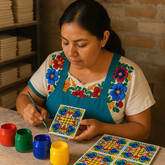
Artisans then apply decorative patterns by hand. Brushes and pigments create the floral, geometric, and traditional motifs associated with Mexican ceramic design.
After decoration and glazing, additional kiln firing develops the finished colors and glossy surface. Differences in hand painting and firing naturally contribute to variation from one tile to another and between production batches.
These characteristics distinguish handmade ceramic from mechanically printed tile and make it particularly appropriate for rustic interiors.
Plan the Backsplash with the Actual Tiles
Before permanent installation, review and arrange the actual tiles. This is useful for both repeating and mixed-pattern backsplashes.
For a repeated design, confirm how motifs connect. For mixed patterns, distribute colors and similar designs throughout the wall rather than allowing accidental clusters.
Because handmade tile can vary, working with the physical material also allows the installer to make small adjustments before setting the pieces permanently.
Consider Corners, Outlets, and Cabinet Edges
Pattern interruptions are most noticeable around outlets, windows, corners, range openings, and cabinetry transitions. These areas should be considered during the layout stage.
An experienced installer can determine where cuts should occur and how patterns can terminate naturally.
This planning becomes particularly important with larger motifs, where an awkward cut may be more visible than it would be on a simple field tile.
Grout Changes the Appearance of the Pattern
Grout is part of the finished backsplash composition. Its color influences how strongly individual tiles and patterns are defined.
A lighter grout can keep the installation bright and separate darker patterns. A darker grout produces stronger outlines. A neutral grout can allow the tile colors to remain dominant.
With handmade ceramic, grout joints can also help accommodate subtle dimensional variation while preserving the overall visual rhythm.
Lighting Can Enhance Both Wood and Ceramic
Lighting has a significant effect on a rustic kitchen because wood and glazed ceramic respond differently to illumination.
Under-cabinet lighting can reveal the glossy surface and color variation of a backsplash, while warmer ambient lighting can emphasize the richness of natural wood.
Thoughtful lighting helps prevent dark cabinetry from feeling heavy and makes the ceramic patterns easier to appreciate during evening use.
Cleaning a Patterned Kitchen Backsplash
Kitchen backsplashes naturally encounter food residue, water, and cooking splashes. Regular gentle cleaning can prevent buildup from becoming difficult to remove.
For routine maintenance of glazed decorative ceramic, warm water, mild soap, and a soft cloth or nonabrasive sponge are sensible starting points. Abrasive tools and unnecessarily aggressive cleaners should be avoided.
Areas close to cooking equipment may need more frequent attention, while grout should be maintained according to the requirements of the product selected for the installation.
Creating a Kitchen That Feels Collected Over Time
One of the most appealing qualities of a rustic kitchen is the impression that its materials have been selected for character rather than perfect uniformity.
Wood cabinetry can provide the architectural foundation. Mexican tile introduces handcrafted artwork. Stone contributes natural variation, while copper or iron adds another layer of traditional material character.
When these elements are balanced thoughtfully, the kitchen can feel as though it developed gradually rather than being purchased as a completely matched collection.
Mexican Pattern Tile Beyond Traditional Rustic Design
Mexican tile can also be used in updated rustic kitchens that incorporate contemporary elements. Flat-front wood cabinets, streamlined appliances, simple countertops, and modern lighting can all coexist with a traditional hand-painted backsplash.
The contrast between clean modern geometry and artisan ceramic often makes the tile even more noticeable.
This approach allows homeowners to enjoy Mexican craftsmanship without recreating a historically styled interior.
Explore Mexican Pattern Tiles for a Rustic Kitchen
If you are designing a rustic kitchen with natural or stained wood cabinetry, you can explore Mexican Tile Store for Mexican pattern tiles, Talavera ceramics, and decorative products that can add color and handmade character to the space.
Before selecting a backsplash, consider the wood tone, countertop, flooring, range hood, hardware, lighting, and amount of pattern already present in the kitchen. These elements can help determine whether a restrained repeated design or a more colorful mixed composition will work best.
If you have questions about Mexican pattern tiles, product availability, or choosing tile for a kitchen project, you can contact our team for additional assistance.
Conclusion: Bringing Warmth, Color, and Craftsmanship Together
Mexican pattern tiles work exceptionally well in rustic kitchens with wood cabinetry because the materials complement one another without needing to match. Wood provides warmth, grain, and architectural substance, while hand-painted ceramic introduces color, pattern, and artisan detail.
The backsplash can be subtle or expressive. Blue-and-white tiles can provide controlled contrast against warm cabinetry, while multicolored patterns can turn the wall into the kitchen's main focal point. Decorative range panels, mixed-pattern installations, borders, copper range hoods, stone countertops, terracotta floors, and wrought iron details offer additional ways to build a layered rustic interior.
The most successful design ultimately depends on balance. When natural wood is allowed to display its grain and handmade tile is allowed to show its variations in color, brushwork, and glaze, neither material needs artificial perfection. Together, they can create a kitchen that feels warm, individual, and deeply connected to the enduring character of Mexican craftsmanship.