


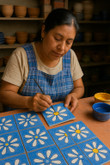
Mexican Pattern Tiles for Spanish Revival, Hacienda, and Mediterranean Interiors
Mexican pattern tiles can give an interior more than color. Their repeated geometry, painted motifs, and handcrafted surfaces introduce architectural rhythm, connect rooms to regional traditions, and create focal points that feel integral to the building. In Spanish Revival, Hacienda, and Mediterranean interiors, these qualities are especially valuable because ornament is expected to work in partnership with plaster, wood, stone, terracotta, and iron.
Although these three design styles share certain materials and historical influences, they are not interchangeable. Spanish Revival interiors often favor carefully framed ornament and formal architectural details. Hacienda spaces can support warmer colors, rustic materials, and more varied tile compositions. Mediterranean rooms typically emphasize sunlight, natural textures, and an easy relationship between indoor and outdoor living.
Choosing the right Mexican tile therefore requires more than selecting a beautiful pattern. Color, scale, placement, grout, lighting, and surrounding finishes all affect the result. A tile that brings vitality to a courtyard may feel too visually dense across an entire kitchen. A small motif suited to a backsplash may lose definition on a large wall.
Thoughtful planning allows patterned tile to strengthen each style while giving the finished space its own identity.
What Are Mexican Pattern Tiles?
Mexican pattern tiles are decorative ceramic tiles featuring painted, glazed, molded, or relief designs. The category includes Talavera and Talavera-inspired tiles, geometric patterns, floral motifs, solid-color glazed pieces, borders, murals, and repeating modular designs.
Some patterns are complete within a single tile. Others emerge only when several pieces are placed together. Four tiles might form a larger medallion, for example, while a directional motif can create diagonal movement or an interlocking field across a wall.
Mexican tilemaking reflects the exchange of Indigenous ceramic knowledge with techniques and decorative ideas introduced from Spain. Spanish ceramics had already absorbed influences from Islamic art, including geometry, stylized plant forms, and repeating surface patterns. In Mexico, these traditions developed through local clays, pigments, imagery, and workshop practices.
As a result, Mexican pattern tile is not defined by one motif or color combination. Designs may be highly detailed and multicolored, restrained and geometric, or painted in a limited blue-and-white palette. This variety makes the material adaptable to several architectural traditions without erasing its handcrafted character.
Why Patterned Tile Works in These Architectural Styles
Spanish Revival, Hacienda, and Mediterranean interiors are generally built around substantial architectural forms. Arches, deep window openings, ceiling beams, plaster walls, masonry fireplaces, and courtyards give each space a clear physical structure.
Patterned tile works well because it can emphasize those forms. It can mark the transition through an arched doorway, define a stairway, frame a firebox, or create a visual destination at the end of a hallway. Rather than floating on the surface as incidental decoration, the pattern becomes part of how the architecture is read.
These styles also depend on material contrast. Glossy glazed tile stands out against matte plaster. Detailed painting creates interest beside broad wood grain. Saturated color gains warmth from terracotta and clarity from pale stucco.
The contrast is strongest when the designer establishes hierarchy. Pattern should occupy selected locations while quieter surfaces provide visual rest. This prevents the interior from becoming a collection of equally assertive materials.
Mexican Pattern Tiles in Spanish Revival Interiors
Spanish Revival architecture became prominent in the United States during the early twentieth century, particularly in California and the Southwest. It interpreted elements drawn from Spanish Colonial, Mission, Moorish, Mediterranean, and regional building traditions.
Typical features include stucco walls, red clay roof tiles, arches, wrought-iron details, courtyards, heavy wooden doors, decorative ceilings, and tiled staircases or fountains. Patterned ceramic tile supplies concentrated ornament within this otherwise disciplined palette.
For a Spanish Revival interior, formal layouts often work especially well. A repeated geometric backsplash, symmetrical fireplace surround, or carefully framed mural supports the architecture’s sense of order. Borders can define edges and create transitions between patterned tile and plaster, stone, or solid field tile.
Classic blue, green, yellow, rust, and cream palettes complement dark wood and ironwork. However, the design does not need to reproduce a historic room exactly. A limited blue-and-white pattern can make a Spanish Revival kitchen feel lighter, while monochromatic relief or geometric tile can introduce a more contemporary interpretation.
Scale is important. Larger homes with high ceilings and substantial fireplaces can support broad repeats and detailed borders. Smaller rooms often benefit from concentrating pattern behind a range, around a doorway, or on stair risers rather than covering every wall.
Using Mexican Tiles in Hacienda-Style Spaces
Historic haciendas combined residential, agricultural, and working spaces. Their architecture often included thick walls, interior courtyards, shaded arcades, fountains, timber construction, and durable surfaces selected for practical use.
Contemporary Hacienda style interprets this character through warm plaster, rustic wood, terracotta, leather, iron, carved furniture, and colorful ceramics. Mexican pattern tiles are a natural fit because they can provide ornament while protecting frequently used surfaces.
Hacienda interiors can generally support a more relaxed combination of patterns than formal Spanish Revival rooms. Several coordinating tiles may be mixed across stair risers, kitchen backsplashes, or a courtyard fountain. The composition should still share a controlled palette so it feels collected rather than random.
Warm colors are particularly effective. Yellow, terracotta, deep blue, green, and reddish brown relate naturally to clay floors, timber beams, and sun-washed walls. Bright cobalt or turquoise can provide contrast, especially near water features and outdoor living areas.
Signs of the handmade process suit the Hacienda aesthetic. Minor variations in brushwork, glaze, dimensions, and color reinforce the relationship with other natural and artisan-made materials. The objective is not deliberate imperfection but a surface that retains evidence of its production.
Mexican Tile in Mediterranean Interiors
Mediterranean design draws from a broad geographic region, including Spain, Italy, Greece, southern France, and North Africa. Although each area has a distinct identity, Mediterranean interiors often share pale plaster, warm stone, aged wood, ceramic surfaces, and spaces designed around natural light.
Mexican pattern tiles can complement this material language when the palette and layout are selected carefully. Blue-and-white designs work well in coastal interpretations, particularly beside limestone, white plaster, and weathered timber. Green, ochre, and terracotta patterns create a warmer atmosphere suited to kitchens and dining rooms.
Geometric patterns can reinforce the Moorish influence present in parts of Mediterranean architecture. Stars, interlocking forms, repeated medallions, and stylized foliage relate naturally to arches, carved screens, patterned textiles, and metal lanterns.
A Mediterranean interior should still feel relaxed and connected to its environment. Avoid forcing pattern onto every available surface. A tiled backsplash, low wall, fountain, or tabletop can introduce color while allowing the architecture and sunlight to remain dominant.
For a contemporary Mediterranean room, use one pattern in a limited color range. Simple cabinetry and furniture can then create a clean framework around the handcrafted surface.
Selecting Patterns That Match the Architecture
Pattern selection should begin with the architectural context rather than personal color preference alone. Consider the proportions of the room, the age and style of the property, and the permanent materials already in place.
Geometric Patterns
Geometric Mexican tiles create structure and rhythm. Stars, diamonds, interlocking circles, and repeated angular forms can emphasize symmetry or add movement to a rectangular surface.
These designs are effective in Spanish Revival entries, Mediterranean bathrooms, and contemporary kitchens influenced by traditional architecture. They can feel historic or modern depending on their palette. Multicolor geometry tends to appear more traditional, while two-color patterns create a cleaner effect.
Floral and Botanical Motifs
Floral tiles soften masonry, dark wood, and iron. They work well in Hacienda kitchens, garden rooms, vanity backsplashes, and courtyards where the imagery can connect to plants and the surrounding landscape.
Small floral repeats offer detail at close range. Larger medallions are more legible across fireplaces, fountains, or broad wall panels. Designers should consider how cuts will affect central flowers and other recognizable elements.
Mixed-Pattern Installations
A combination of coordinating patterns can create a layered, collected appearance. This approach is particularly suitable for Hacienda interiors and informal Mediterranean spaces.
Mixed layouts require discipline. Select tiles with a shared background, repeated border color, or controlled group of pigments. Distribute complex and simple motifs evenly so no area becomes visually heavier than the rest.
Borders and Corner Tiles
Borders give patterned fields a finished architectural edge. They can frame a mural, outline a backsplash, emphasize a staircase, or separate tile from plaster.
Corner pieces should be included during the initial design phase. Attempting to create corners from straight borders after ordering can interrupt the pattern and produce awkward cuts.
Choosing a Color Palette
Mexican pattern tiles often contain several colors, but the complete room does not need to repeat all of them. Identify one dominant color, one supporting color, and one or two smaller accents.
Cobalt blue is especially versatile. It contrasts with terracotta and dark wood, complements white plaster, and relates naturally to water in bathrooms, fountains, and poolside applications.
Yellow and orange introduce warmth and can brighten kitchens or shaded interiors. Green connects tile to courtyards, plants, and garden views. Black or deep brown outlines provide definition and relate to ironwork or wood.
The tile’s background color also matters. A soft cream or warm white usually integrates more naturally with aged plaster, limestone, and rustic materials than a brilliant cool white. Cooler backgrounds may be preferable in contemporary Mediterranean interiors with gray stone or painted cabinetry.
Physical samples should always be compared with flooring, counters, cabinets, wall finishes, and metalwork. Screen images cannot accurately reproduce glaze depth, pigment concentration, or the way a tile responds to the room’s light.
Kitchen Backsplashes and Range Features
The backsplash is one of the most practical locations for Mexican pattern tile. It introduces color near eye level while protecting the wall behind food preparation and cooking areas.
A full patterned backsplash can energize a kitchen with simple cabinets and quiet counters. If the countertop contains strong veining or movement, a more restrained tile may create a better balance.
For a focused installation, use decorative tile behind the range and surround it with solid-color field tile. A coordinating border can frame the panel and give it a custom appearance. This arrangement is effective in Spanish Revival kitchens because it reinforces symmetry and makes the range wall the visual center.
Mixed-pattern backsplashes are well suited to Hacienda-style kitchens. Lay the tiles out before installation and vary the position of dominant colors. Avoid placing identical patterns directly beside one another unless repetition is part of the intended design.
Consider the location of outlets, switches, cabinet edges, and appliances. A scaled elevation helps prevent important motifs from being cut or hidden. It also allows borders to align correctly with the cabinetry.
Bathrooms, Vanities, and Shower Accents
Patterned tile can give a neutral bathroom a distinctive identity without covering every surface. A vanity backsplash, framed mirror, wall border, or recessed niche can provide a controlled area of color.
Powder rooms can support particularly expressive designs because they are small, enclosed, and generally less exposed to continuous moisture than full bathrooms. A patterned vanity wall can create a memorable effect with a relatively modest amount of tile.
In showers, decorative tile is often used as an accent panel or at the back of a niche. Confirm that the chosen tile, glaze, substrate, waterproofing system, adhesive, and grout are appropriate for the intended wet application.
Decorative wall tile should not automatically be specified for shower floors. Flooring requires suitable durability and slip resistance. A solid-color, stone, or purpose-made floor tile can coordinate with the pattern while providing the necessary performance.
Fireplace Surrounds and Feature Walls
Fireplaces provide a natural frame for decorative tile. Pattern can appear immediately around the firebox, cover the full surround, or form a panel above a simple mantel.
For Spanish Revival rooms, symmetrical designs and defined borders can reinforce the fireplace’s architectural importance. Hacienda interiors may use a warmer or more varied composition, while Mediterranean rooms often benefit from a limited blue, green, or ochre palette.
The mantel material changes the overall character. Carved wood adds warmth, stone creates formality, and plaster keeps the composition visually quiet. Whichever material is selected, it should support the tile rather than compete with its pattern.
Fireplace installations require more than an attractive layout. The substrate, tile, setting products, grout, and construction clearances must be suitable for the heat conditions and applicable building requirements.
Stair Risers and Transitional Spaces
Mexican pattern tiles are especially effective on stair risers because each step becomes a separate decorative band. The composition reveals itself gradually as a person moves through the space.
Repeating one pattern produces a formal result suitable for Spanish Revival architecture. Alternating coordinating designs creates the relaxed variety associated with Hacienda homes. A Mediterranean staircase might use blue-and-white motifs with stone or pale wood treads.
Plan the complete sequence before installation. Place all patterns in order, balance strong colors, and photograph the approved arrangement. This gives the installer a clear reference and reduces accidental repetition.
Tile can also mark transitions at entry halls, arched passages, and thresholds. These locations benefit from ornament because they already represent a change between spaces. Pattern makes that transition more visible and memorable.
Courtyards, Fountains, and Outdoor Rooms
Courtyards are central to Spanish Revival, Hacienda, and Mediterranean architecture. They extend living space outdoors while providing shade, ventilation, privacy, and a connection to water and planting.
A tiled fountain can anchor the courtyard. Blue patterns emphasize water, multicolor tiles create a lively Mexican character, and geometric designs bring structure to a simple plaster or stone basin.
Other applications include stair risers, outdoor kitchen backsplashes, serving counters, benches, wall panels, planter boxes, and decorative inserts. Place complex patterns where furnishings and equipment will not conceal them.
Not every decorative tile is suitable for exterior conditions. Freeze-thaw cycles, standing water, direct sunlight, temperature changes, and mineral exposure can affect ceramic materials and glazes. Product suitability, drainage, waterproofing, movement joints, and installation systems should be reviewed before ordering.
How Handmade Variation Influences the Finished Design
Handmade Mexican tiles may show differences in brushwork, color, glaze distribution, dimensions, and edge shape. These variations allow the installed surface to feel animated rather than mechanically repeated.
Variation should be managed intentionally. Open multiple boxes and review the tiles before setting. Distribute lighter, darker, and more visibly irregular pieces throughout the installation instead of allowing them to form accidental clusters.
Minor differences are often desirable, but serious cracks, unstable glaze, or structural damage should be evaluated separately. A knowledgeable tile supplier can explain which characteristics are expected from the production method.
The installer also needs experience with artisan tile. Slight dimensional differences may require flexible grout spacing and careful alignment. Mechanical uniformity is not the objective, but the overall pattern should remain orderly.
Planning Pattern Scale, Layout, and Grout
Pattern scale should correspond to both the installation area and the viewing distance. Small, detailed motifs work well on backsplashes and risers where they can be seen closely. Larger repeats remain legible on feature walls, fountains, and broad fireplace surrounds.
Determine whether the design is complete on one tile or requires several pieces. A four-tile medallion needs enough uninterrupted space to repeat properly. Complicated walls with numerous outlets may be better suited to smaller motifs that tolerate cuts.
Grout color can change how the pattern is perceived. A color close to the tile background softens the grid and allows the painted design to dominate. Contrasting grout emphasizes every individual tile and may make a detailed composition feel busier.
Dry-lay the design before installation. Confirm pattern direction, border alignment, color distribution, and the position of cuts. This step is essential for mixed patterns and designs that create a larger image across several tiles.
Ordering the Correct Quantity
Accurate measurement should include the complete installation area as well as cuts, selection, potential breakage, and future repairs. The appropriate overage depends on the pattern and layout.
Simple rectangular fields generally need less extra material than diagonal layouts, murals, bordered panels, niches, or staircases. Directional patterns may also require additional pieces because offcuts cannot always be rotated and reused.
Order the full project quantity at one time whenever possible. Handmade glaze and pigment can vary between production batches. A later order may not blend seamlessly with the original installation.
Trim, borders, corners, and specialty pieces should be counted separately. Keeping a small number of unused tiles after completion can make future repairs much easier.
Craftsmanship as an Architectural Value
The appeal of Mexican pattern tile is closely connected to its production. Handmade tiles may pass through clay preparation, forming, controlled drying, an initial firing, glazing, painting, and a final firing. Each stage influences the finished surface.
Artisans must understand how pigments respond to kiln heat, how glaze settles around a painted line, and how clay changes dimensions as it dries and fires. Repeating a motif by hand also requires consistency without removing every trace of the maker.
This balance gives patterned tile its depth. The design is ordered enough to create an architectural composition, yet individual pieces retain evidence of brushwork and material behavior.
For homeowners and designers, craftsmanship provides value beyond decoration. It gives the finished room a human scale and a connection to a living ceramic tradition. These qualities become increasingly important in interiors otherwise dominated by standardized products.
Explore Mexican Pattern Tiles for Your Project
The right tile should respond to the property’s architecture, the scale of the installation, and the desired level of color. A formal Spanish Revival fireplace, relaxed Hacienda kitchen, and light-filled Mediterranean bathroom may require different patterns even when they share a related ceramic tradition.
Explore Mexican pattern tiles, decorative designs, borders, murals, and coordinating pieces at Mexican Tile Store. Reviewing several options can help clarify whether the project needs a repeating field, mixed-pattern composition, framed focal panel, or smaller architectural accent.
For assistance with product selection, quantities, coordinating components, or the requirements of a specific application, contact Mexican Tile Store before ordering. Early planning can help align the creative concept with practical installation needs.
Conclusion
Mexican pattern tiles are naturally suited to Spanish Revival, Hacienda, and Mediterranean interiors because they share an appreciation for ornament, natural materials, and architecture shaped by light. Yet the strongest designs do more than place traditional-looking tile inside a stylistic setting.
They consider how the pattern relates to arches, cabinetry, fireplaces, stairs, and courtyards. They coordinate color with wood, plaster, stone, terracotta, and metal. They use borders, grout, scale, and repetition to make the installation feel planned for its exact location.
Handmade variation adds another level of individuality. Slight differences in glaze and painted detail allow each completed surface to have its own visual rhythm, even when it uses an established pattern.
Whether applied to a full backsplash, a fountain, a series of stair risers, or a small tiled niche, Mexican pattern tile can give a room a recognizable sense of place. Careful selection and installation preserve the balance between tradition and personal expression, resulting in interiors that feel distinctive, enduring, and connected to genuine craftsmanship.