


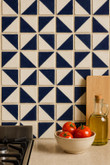
Mexican Talavera Tiles for Spanish, Mediterranean, and Hacienda Style Homes
Mexican Talavera tiles bring color, pattern, and handcrafted character to architecture. Their painted surfaces can turn a kitchen backsplash into a focal point, give a staircase a distinctive rhythm, or make a courtyard feel connected to centuries of ceramic tradition. Unlike decorative finishes selected only for color, Talavera tiles contribute both visual storytelling and a tangible sense of craftsmanship.
They are particularly well suited to Spanish, Mediterranean, and Hacienda-style homes because these architectural traditions share an appreciation for natural materials, ornamental detail, and spaces shaped by sunlight. Stucco walls, dark timber, wrought iron, terracotta floors, and carved wood create an ideal setting for the saturated blues, greens, yellows, and warm earth tones associated with Mexican tilework.
Successful Talavera design requires more than choosing an attractive pattern. Scale, placement, surrounding materials, grout color, and natural variation all influence the finished installation. Whether the project involves a complete kitchen, a fireplace surround, a bathroom vanity, or a small decorative accent, understanding the tile’s history and handmade qualities leads to a more cohesive and enduring result.
What Defines Mexican Talavera Tile?
Talavera is a type of glazed earthenware associated with a long ceramic tradition in Mexico, particularly in Puebla and nearby areas. Its visual identity developed through the interaction of European pottery methods, Islamic decorative influence, and Indigenous knowledge of clay, pigments, and firing.
Traditional Talavera work often features a light-colored glazed background decorated with mineral-based colors. Cobalt blue is especially recognizable, but green, yellow, orange, black, and other tones also appear in both historic and contemporary designs. Patterns range from floral medallions and scrolling vines to geometric stars, borders, birds, and highly structured repeating compositions.
In the broader decorative tile market, the term “Talavera tile” is also commonly used for Mexican hand-painted tiles inspired by this ceramic heritage. These pieces may be produced in different regions and workshops using methods that vary from strictly traditional certified processes. For a design project, it is helpful to distinguish between formally certified Talavera ceramics and Talavera-style decorative tiles so expectations about provenance, appearance, price, and production are clear.
Regardless of classification, authentic handmade character is central to the appeal. Brushstrokes may be visible, lines may vary slightly in thickness, and colors may shift from one firing batch to another. These qualities create a surface that feels made by people rather than printed by a machine.
Why Talavera Complements Spanish-Style Architecture
Spanish-style homes are often defined by pale stucco walls, low-pitched clay tile roofs, arched openings, wooden doors, ironwork, and shaded courtyards. The architecture relies on strong forms and a relatively restrained material palette. Decorative tile introduces concentrated areas of color without disturbing that structural clarity.
Talavera tiles can emphasize architectural transitions. A patterned border may outline an arched doorway, while a tiled stair riser draws attention to the movement between levels. In kitchens, hand-painted tile creates a natural relationship with plaster walls, dark cabinets, hammered metal, and rustic wood.
The strongest Spanish-style installations rarely cover every available surface. Instead, tile is used to define focal areas. A detailed mural behind a range, a decorative fireplace panel, or a narrow border around a doorway can carry more visual authority than several competing patterns distributed throughout the room.
Repetition also matters. If the same palette appears in a kitchen backsplash and nearby stair risers, the spaces feel connected even if the patterns are different. This approach supports the collected character of Spanish architecture while maintaining design discipline.
Talavera Tiles in Mediterranean Interiors
Mediterranean design draws from several regions, including Spain, Italy, Greece, southern France, and North Africa. Individual traditions differ, but many Mediterranean interiors share an emphasis on warm light, tactile surfaces, natural materials, and a close relationship between indoor and outdoor living.
Mexican Talavera tiles complement these qualities through color and surface variation. Blue-and-white designs can suggest coastal settings and pair naturally with white plaster, limestone, and weathered wood. Yellow, green, and terracotta-toned patterns create a warmer composition suited to kitchens, patios, and dining spaces.
For a refined Mediterranean room, choose a limited tile palette and repeat its dominant colors elsewhere through textiles, pottery, or painted cabinetry. The room does not need exact color matching. Slight shifts in tone often produce a more layered and natural appearance.
Geometric Talavera patterns can also reference the Moorish influence visible in parts of Mediterranean architecture. Stars, interlocking forms, and repeating medallions work particularly well with arches, carved screens, iron lanterns, and patterned floors. Careful editing is essential: if the tile is complex, surrounding textiles and finishes should provide visual rest.
The Role of Tile in Hacienda-Style Homes
Historic haciendas were working estates as well as residences. Their architecture often incorporated thick masonry walls, interior courtyards, covered walkways, fountains, wood beams, and durable finishes selected for both practicality and beauty. Modern Hacienda-style homes interpret these elements in ways suited to contemporary living.
Mexican tile feels especially natural in this setting because it can be both functional and decorative. Glazed tile protects surfaces from moisture and wear while introducing motifs connected to regional ceramic traditions. It can appear on kitchen counters, washbasins, fountains, benches, stair risers, and outdoor cooking areas.
A Hacienda-inspired interior can accommodate richer color than many other design styles, but successful rooms still benefit from hierarchy. One dominant tile pattern may be supported by simpler solid-color or lightly patterned tiles. Terracotta flooring and neutral plaster help anchor the composition.
Wood is another important partner. Heavy ceiling beams, carved doors, and rustic cabinetry provide warmth and visual weight. Against these surfaces, Talavera tile offers brightness and detail. Wrought iron, aged brass, copper, and hand-forged hardware can reinforce the sense of craftsmanship without making the room feel theatrical.
How Mexican Talavera Tiles Are Made
The handmade production process contributes directly to the appearance of Talavera tile. Methods differ among workshops, but several essential stages shape the finished product.
Preparing and Forming the Clay
Tile production begins with clay that has been selected and prepared for forming. The material must have enough plasticity to be shaped while remaining stable during drying and firing. Air pockets and uneven moisture can lead to cracking or distortion, so the clay requires careful handling.
Tiles may be formed in molds or pressed to produce a relatively consistent size and thickness. Even with molds, handmade production can leave small dimensional differences. The tiles are dried gradually before their first firing. Rapid or uneven drying can cause warping, especially near corners and edges.
Applying the Base Glaze
After the first firing, a base glaze is applied. This layer creates the background on which the decoration will appear. Traditional-looking Talavera surfaces are not always stark white; they may have a soft ivory or slightly creamy tone that gives the finished design warmth.
The glaze surface may also contain minor variations. Rather than diminishing the tile, these changes can contribute to its visual depth, particularly across a large installation where many pieces are viewed together.
Painting the Design by Hand
Artisans apply patterns with brushes, following established designs or creating custom compositions. The painter must control the amount of pigment because the colors seen before firing may look different after exposure to kiln temperatures.
Hand-painted lines are rarely identical from tile to tile. A petal may be slightly wider, a curve may vary, or the color concentration may shift. In a complete installation, these details produce a lively surface that remains unified by the repeating motif.
The Final Firing
During the glaze firing, the painted decoration and glazed surface fuse to the ceramic body. Temperature, kiln placement, glaze thickness, and pigment behavior can influence the result. Colors become more saturated, and the surface develops its characteristic finish.
Firing is a technical stage as well as an artistic one. Experienced craftspeople understand how to manage heat and timing to achieve a durable surface while preserving the intended color relationships. The finished tile embodies decisions made throughout the entire process, from clay preparation to kiln cooling.
Understanding the Beauty of Handmade Variation
Machine-made tiles are designed to minimize differences. Handmade Mexican tiles approach consistency differently. The overall size, pattern, and palette may remain recognizable, while individual pieces retain minor variations in brushwork, glaze, tone, and edge shape.
These variations should be distributed intentionally during installation. Before setting the tile, open several boxes and arrange pieces from different areas of the order. This prevents similar tones or stronger variations from forming accidental clusters.
Small irregularities can soften the grid created by grout joints and make the wall feel less mechanical. They are especially attractive near natural materials such as stone, timber, plaster, and terracotta, which have their own variations.
Handmade character should not be confused with structural damage. Tiles with serious cracks, unstable glaze, or damage that affects installation should be set aside. A knowledgeable supplier can help explain which features are expected and which may warrant replacement.
Designing a Talavera Kitchen Backsplash
The kitchen is one of the most effective places to use Mexican Talavera tiles. A backsplash sits close to eye level, receives regular light, and provides enough area for a pattern to develop without dominating the entire room.
Begin by deciding whether the backsplash will serve as the primary decorative feature or support another focal point. If the cabinets, countertops, and flooring are visually quiet, a full patterned backsplash can add energy. If the kitchen already includes veined stone, detailed cabinetry, or a colorful range, a simpler tile arrangement may be more appropriate.
One strategy is to use decorative Talavera tiles behind the range and surround them with solid-color field tiles. A border can frame the composition and give it the presence of an architectural panel. Another option is to mix several related patterns across the full backsplash, creating a collected appearance.
For mixed-pattern layouts, maintain a controlled palette. Tiles can feature different designs while sharing two or three dominant colors. This creates variety without visual disorder. Lay the composition on a flat surface before installation to avoid placing nearly identical tiles next to one another.
Glazed tile is generally practical for backsplashes, but recessed grout joints and textured edges still require normal maintenance. A suitable grout and professional installation help create a surface that is easier to clean around cooking and preparation areas.
Using Talavera Tile in Bathrooms
Bathrooms provide opportunities for both bold and restrained tile treatments. A Talavera vanity backsplash can introduce color without requiring a large quantity of material. Decorative tiles may also frame a mirror, outline a niche, or form a wainscot around the room.
In a powder room, where moisture exposure is usually limited, an elaborate pattern can create a strong impression. Full bathrooms require more technical planning. Confirm that the selected tile, glaze, setting materials, and grout are appropriate for the intended wet area.
Hand-painted wall tiles should not automatically be assumed suitable for shower floors. Floor surfaces require appropriate slip resistance and durability. A practical approach is to use decorative Talavera tile on walls while selecting a compatible floor material designed for regular foot traffic and water exposure.
Pairing patterned tile with plaster-like walls, natural stone, or simple solid-color tile keeps the bathroom balanced. Brass, bronze, or copper-toned fixtures can complement warm pigments, while black iron creates a stronger Spanish or Hacienda influence.
Fireplaces, Stair Risers, and Architectural Accents
A fireplace surround gives Talavera tile a clear architectural frame. Repeating patterns can cover the entire surround, or a decorative central panel can be combined with solid trim. The mantel material should relate to the room’s style: carved wood supports Hacienda interiors, limestone suits a Mediterranean palette, and simple plaster can produce a more contemporary interpretation.
For installations close to a firebox, verify that every component is appropriate for the expected heat. Tile alone does not determine performance; the substrate, adhesive, clearances, and construction of the fireplace also matter.
Stair risers are another classic application. Because each riser functions like a narrow horizontal panel, it can display a single repeated pattern or a sequence of coordinating designs. Alternating patterns creates movement, while repeating one design produces a quieter and more formal effect.
Talavera tiles can also accent arched niches, window surrounds, doorways, built-in benches, and kitchen islands. These smaller applications allow homeowners to introduce handcrafted color without committing to a fully tiled room.
Courtyards, Fountains, and Outdoor Living Areas
Spanish, Mediterranean, and Hacienda-style homes often blur the boundary between interior and exterior space. Courtyards, loggias, patios, and fountains function as extensions of the home, making them natural settings for decorative Mexican tile.
A tiled fountain can become the visual anchor of a courtyard. Blue-and-white patterns reinforce the association with water, while multicolor tiles create a more exuberant Mexican character. Decorative borders can define the basin, rim, or surrounding wall.
Outdoor kitchens and serving areas also benefit from glazed surfaces. Talavera tile can be used on a backsplash, bar front, counter face, or recessed wall panel. Place intricate designs where they can be seen rather than covering them with equipment or furnishings.
Exterior performance depends on the tile and climate. Freeze-thaw cycles, prolonged moisture, direct sunlight, and temperature changes can affect ceramic materials. Confirm exterior suitability with the supplier and installer before ordering. Proper drainage, waterproofing, expansion accommodation, and setting materials are essential for a lasting result.
How to Select the Right Pattern and Color Palette
Start with the architecture rather than selecting a tile in isolation. Identify the permanent colors already present in flooring, countertops, roofing, stone, cabinetry, and woodwork. The tile does not need to match these materials exactly, but it should share a compatible undertone or visual character.
Blue-and-white Talavera tiles are versatile and often create a crisp contrast with terracotta, dark wood, and warm plaster. Multicolor patterns feel richer and more informal, making them suitable for Hacienda kitchens, courtyards, and gathering spaces. Green and yellow palettes can support Mediterranean interiors with warm stone and sun-aged finishes.
Pattern scale should correspond to viewing distance and installation size. Small, detailed motifs work well on backsplashes, stair risers, and borders viewed at close range. Larger geometric patterns are easier to read across a fireplace wall, courtyard feature, or expansive kitchen.
Always evaluate physical samples. Screen colors can differ from actual glaze, and photographs cannot fully communicate surface texture or handmade variation. Place samples beside the project’s other materials and observe them in morning, afternoon, and evening light.
Planning the Layout and Installation
Measure the installation area carefully and account for cuts, breakage, selection, and future repairs. Handmade tile projects generally require an overage, although the appropriate percentage depends on the layout and complexity of the design. Diagonal patterns, borders, niches, and irregular spaces may require more material than a simple rectangular backsplash.
Order the required quantity at one time whenever possible. Because handmade glaze and pigment can vary between production batches, a later order may not match the original installation exactly.
Before installation, dry-lay the tiles to check pattern direction, color distribution, and alignment. Decorative motifs may require a specific orientation. Borders and corner pieces should be confirmed before field tiles are permanently set.
Grout color influences the final appearance. A neutral grout close to the tile’s background color creates continuity and allows the painted design to lead. Darker or contrasting grout emphasizes the grid and can make a varied pattern appear busier.
Handmade tiles may require flexible spacing to accommodate dimensional variation. An installer experienced with artisan tile can adjust joints without losing the overall alignment. This skill is particularly important around borders, electrical outlets, cabinetry, and architectural corners.
Craftsmanship That Adds Lasting Value
The value of Mexican Talavera tile extends beyond surface decoration. Each tile reflects a sequence of material and artistic decisions: preparing clay, forming the body, controlling drying, applying glaze, painting the motif, and managing the kiln.
This process gives a finished installation a degree of individuality that printed reproductions cannot fully provide. Brushwork remains visible, color has depth, and small differences reveal the role of the artisan. The result can make a newly constructed home feel more grounded and give an existing property a stronger connection to its architectural identity.
Quality also affects practical performance. Well-made tile has a properly fired body, a stable glazed surface, and a design suited to its intended application. Specialist guidance is valuable because decorative wall tile, floor tile, exterior tile, and fountain tile are not automatically interchangeable.
Choosing a knowledgeable source allows design considerations and technical requirements to be addressed together. It also makes it easier to coordinate field tiles, borders, trim, murals, and complementary solid colors before installation begins.
Explore Mexican Talavera Tiles for Your Home
A well-planned Talavera installation can give Spanish, Mediterranean, or Hacienda-style architecture a stronger sense of place. The key is to select tiles that relate to the home’s proportions, materials, lighting, and level of ornament rather than treating pattern as an isolated addition.
Explore decorative tile options, patterns, borders, and coordinating designs at Mexican Tile Store. The collection can help inspire applications for kitchens, bathrooms, fireplaces, stair risers, courtyards, fountains, and other architectural features.
If you need assistance with tile selection, quantities, coordinating pieces, or the requirements of a specific project, contact Mexican Tile Store before ordering. Discussing the application early can help identify the most suitable products and prevent avoidable complications during installation.
Conclusion
Mexican Talavera tiles are especially compatible with Spanish, Mediterranean, and Hacienda-style homes because they share the same fundamental design language: handcrafted surfaces, natural materials, architectural detail, and color shaped by light.
Their versatility allows them to serve as a prominent focal point or a carefully placed accent. A full kitchen backsplash can establish the palette of a room, while a small tiled niche or series of stair risers can add character with relatively little material. In every application, scale, placement, and restraint determine whether the finished design feels cohesive.
Talavera tile also carries the value of craftsmanship. Variations in brushwork and glaze make each installation distinct, while the ceramic process connects the finished surface to a long history of Mexican decorative art. These are not simply printed patterns applied to a wall; they are architectural elements shaped through clay, pigment, fire, and skilled labor.
By selecting the right pattern, evaluating samples, planning the layout, and working with appropriate materials, homeowners and designers can create installations that feel authentic rather than themed. The result is a surface with enduring color, cultural depth, and enough visual character to remain meaningful long after temporary design trends have passed.