


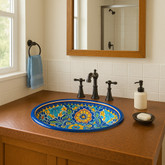
Talavera bathroom sinks represent a remarkable intersection of history, craftsmanship, and everyday functionality. Rooted in centuries-old ceramic traditions, these sinks are far more than utilitarian fixtures. They are artistic expressions shaped by hand, painted with intention, and designed to bring cultural depth into modern living spaces. From their origins in traditional Mexican pottery to their role in contemporary interior design, Talavera sinks continue to stand as enduring symbols of authenticity and refined craftsmanship.
Today, these sinks are used not only for their practical purpose but also as central design elements in bathrooms. Their intricate patterns, vibrant colors, and handmade character elevate interiors, transforming ordinary spaces into visually engaging environments. Understanding their history, creation process, and modern applications reveals why Talavera sinks remain highly valued in both residential and commercial design.
A Tradition Rooted in Centuries of Craftsmanship
The origins of Talavera ceramics trace back to the 16th century, when Spanish artisans introduced tin-glazed pottery techniques to Mexico. These methods merged with indigenous ceramic traditions, resulting in what is now known as Talavera. Over time, this craft evolved into a highly respected art form, particularly in regions such as Puebla and central Mexico.
Bathroom sinks, while a more modern adaptation, are a natural extension of this tradition. The same techniques used to create tiles, plates, and decorative vessels are applied to sink production, ensuring consistency in both quality and artistic expression. Each sink reflects a lineage of craftsmanship that has been preserved and refined over generations.
This long-standing tradition is what gives Talavera sinks their cultural significance. They are not mass-produced items but handcrafted pieces that carry the identity of the artisan and the region in which they were made.
The Creation Process: From Clay to Functional Art
Natural Clay Selection
The process begins with carefully selected natural clay, chosen for its durability and workability. This clay is cleaned and prepared to achieve the proper consistency, ensuring that it can be shaped without compromising structural integrity.
Hand Shaping the Sink
Each sink is formed by hand or with the aid of molds, depending on the design. The shape—whether round, oval, or rectangular—is carefully crafted to balance aesthetics and functionality. This stage defines the sink’s proportions and overall character.
Drying and Initial Firing
Once shaped, the sink is left to dry naturally before undergoing its first kiln firing. This process hardens the clay and prepares it for decoration. The result is a solid ceramic form ready to receive its artistic details.
Hand-Painted Design
The defining feature of Talavera sinks lies in their hand-painted patterns. Artisans use mineral-based pigments to create intricate designs, often inspired by floral motifs, geometric patterns, and cultural symbolism. Each piece is painted individually, ensuring that no two sinks are exactly alike.
Glazing and Final Firing
A tin-based glaze is applied to seal the surface and create a smooth, glossy finish. The sink is then fired again at high temperatures, permanently setting the design and enhancing durability. This final step transforms the piece into a functional and long-lasting fixture.
Everyday Use: Practical Functionality in the Home
Despite their artistic appearance, Talavera sinks are designed for everyday use. The glazed surface provides resistance to water and makes cleaning straightforward, while the ceramic body ensures durability over time.
In domestic settings, these sinks serve as reliable fixtures in bathrooms, combining practicality with visual appeal. Their sturdy construction allows them to withstand daily use, while their handcrafted nature ensures that they remain visually engaging even after years of use.
Homeowners often choose Talavera sinks because they offer something beyond standard fixtures—a sense of individuality and character that enhances the overall experience of the space.
Talavera Sinks in Interior Design
Statement Pieces in Bathrooms
Talavera sinks are frequently used as focal points in bathroom design. Their bold patterns and vibrant colors draw attention, anchoring the visual composition of the space. Whether paired with rustic wood vanities or modern countertops, they create a striking contrast that elevates the design.
Complementing Various Design Styles
These sinks are highly versatile and can be integrated into a range of styles, including Spanish Colonial, Mediterranean, Hacienda, and even contemporary interiors. In traditional settings, they reinforce cultural authenticity. In modern spaces, they introduce warmth and texture, balancing clean architectural lines.
Creating Visual Depth and Texture
The hand-painted surfaces of Talavera sinks add depth and movement to interiors. Unlike uniform materials, the subtle variations in color and brushwork create a dynamic visual effect that changes depending on lighting and perspective.
The Value of Handmade Craftsmanship
One of the most important aspects of Talavera sinks is their handmade nature. Each piece is the result of skilled labor, requiring years of experience to master the techniques involved. This level of craftsmanship ensures that every sink meets high standards of quality and authenticity.
Because they are handcrafted, slight variations in color, pattern, and dimensions are expected. These variations are not imperfections but rather indicators of authenticity, reflecting the human element behind each piece.
Investing in a Talavera sink means choosing a product that carries cultural significance and artistic value. It is a decision that supports traditional craftsmanship while adding a unique element to your home.
Choosing the Right Talavera Sink
When selecting a Talavera sink, it is important to consider both functional and aesthetic factors. The size and shape should align with your bathroom layout, while the design should complement your overall interior style.
You can explore our collection of Talavera bathroom sinks to find options that suit a variety of design preferences.
Each sink offers a distinct combination of color, pattern, and craftsmanship, allowing you to select a piece that reflects your personal style while maintaining the integrity of traditional design.
Integrating Tradition into Modern Living
Incorporating Talavera sinks into contemporary interiors is a way of connecting with a rich cultural tradition while enhancing the functionality of your space. These sinks bring warmth, authenticity, and artistic detail into environments that might otherwise feel minimal or uniform.
Their ability to adapt to different design contexts makes them a valuable addition to both residential and commercial projects. Whether used in a private home or a boutique hospitality setting, they contribute to a refined and memorable aesthetic.
Work with Us
If you are considering incorporating Talavera sinks into your project, we invite you to explore our full collection and discover the range of handcrafted options available.
For personalized guidance or questions about sizing, design, or availability, you can contact our team. We are here to help you make informed decisions and ensure that your selection aligns with your vision.
Conclusion: Function Meets Heritage
Talavera bathroom sinks are more than functional fixtures—they are enduring expressions of tradition, craftsmanship, and design. Their origins in centuries-old ceramic techniques, combined with their adaptability to modern interiors, make them a unique and valuable addition to any space.
By choosing a Talavera sink, you are not only enhancing your bathroom but also embracing a legacy of artistry that continues to thrive today. The result is a space that feels authentic, refined, and deeply connected to cultural heritage.