


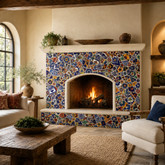
Using Broken Talavera Tiles to Add Color and Texture to Outdoor Spaces
Outdoor spaces become more memorable when they combine natural materials with handcrafted details. Broken Talavera tiles are especially effective for this purpose because their irregular shapes, vibrant colors, and hand-painted surfaces introduce visual movement that feels organic rather than overly formal. Instead of relying only on stone, concrete, or stucco, homeowners can use broken Mexican Talavera to create mosaics that bring warmth, texture, and cultural character into patios, courtyards, gardens, outdoor kitchens, fountains, planters, and decorative walls.
Because Talavera tiles are handmade, every fragment carries subtle differences in color, glaze, brushwork, and pattern. Once broken pieces are combined into a mosaic, those variations create layered surfaces that interact beautifully with sunlight, greenery, water, wood, and masonry. The result is not a perfectly uniform installation, but a handcrafted composition with depth and individuality.
For outdoor projects that call for personality and color, broken Talavera tiles offer a flexible way to transform ordinary architectural surfaces into artistic focal points.
Why Broken Talavera Works So Well Outdoors
Outdoor design benefits from materials that feel connected to their surroundings. Broken Talavera tiles naturally complement gardens, patios, and courtyards because their color palette often echoes elements found in nature and traditional architecture.
Cobalt blue can create a striking contrast with green foliage. Yellow and terracotta tones add warmth alongside stone and stucco. White and blue combinations can create a calmer Mediterranean or Spanish-inspired look, while multicolored fragments produce a more expressive Mexican aesthetic.
The irregular shape of broken tile also suits outdoor architecture particularly well. Curved planters, fountain walls, benches, garden borders, and masonry surfaces often have forms that are difficult to cover with standard square tile. Smaller fragments can follow those shapes more naturally.
Adding Texture Through Irregular Mosaic Surfaces
One of the greatest advantages of broken Talavera is texture. Full-size tiles typically create an organized grid, but mosaics introduce varied grout lines, irregular edges, and changing patterns.
This gives outdoor surfaces a more tactile appearance. As sunlight moves across the mosaic throughout the day, the glazed ceramic fragments reflect light at slightly different angles. The result is a surface that can look subtly different depending on the time of day and viewing position.
That combination of light, glaze, pattern, and irregular geometry makes broken Talavera particularly effective in spaces where texture is an important part of the design.
Creating Colorful Patio Accent Walls
A patio accent wall is one of the most dramatic ways to use broken Talavera tiles. Instead of covering every exterior wall with pattern, one selected section can become the focal point of the outdoor living area.
The mosaic might be placed behind a seating arrangement, outdoor dining table, water feature, or built-in bench. By concentrating color in one location, the design gains personality without overwhelming the architecture.
Surrounding materials such as plaster, natural stone, stucco, wood, and iron can remain relatively simple, allowing the handcrafted ceramic surface to become the visual anchor.
For larger walls, a mosaic can also be framed with stone, brick, or plain field tile to give the composition stronger architectural definition.
Transforming Planters with Broken Talavera
Planters are among the most accessible outdoor projects for broken Talavera. Their relatively small scale allows homeowners to experiment with color and pattern before committing to a larger installation.
Plain masonry or concrete planters can be covered with colorful fragments to create sculptural garden elements. A fully tiled planter makes a strong statement, while a horizontal mosaic band provides a more restrained accent.
Several planters can also be coordinated by using similar color families rather than identical patterns. This maintains visual unity while preserving the handmade character of each piece.
The contrast between colorful ceramic and natural foliage is especially effective, making planters ideal for courtyards, terraces, pool areas, and garden entrances.
Using Talavera on Outdoor Benches
Built-in masonry benches often provide large blank surfaces that can benefit from decorative ceramic detail. Broken Talavera can be installed on the vertical face, backrest, or selected decorative areas to add color and craftsmanship.
In a courtyard, a tiled bench can become part of the architecture rather than simply a piece of furniture. The mosaic visually connects the seating area with nearby planters, fountains, or tiled walls.
For a balanced result, homeowners can keep the seating surface simpler while using Talavera on vertical areas where the pattern remains highly visible.
Creating Decorative Fountain Features
Water and ceramic tile have a long history of working beautifully together. Broken Talavera can add color and texture around fountains, wall-mounted water features, and decorative basins.
Blue and white fragments naturally reinforce the presence of water, while mixed patterns create a more vibrant and traditional Mexican look. Green, yellow, and terracotta pieces can help connect the water feature visually to surrounding landscaping.
The irregular shapes of mosaic fragments are especially helpful for curved fountain forms, where standard tiles might require more extensive cutting.
For areas directly exposed to continuous water, the installation system should be appropriate for submerged or wet conditions, including suitable waterproofing, adhesives, grout, and substrate preparation.
Outdoor Kitchen Backsplashes
Outdoor kitchens can easily become dominated by utilitarian materials such as stainless steel, masonry, and stone. A Talavera mosaic backsplash introduces warmth and visual interest without reducing functionality.
Broken tiles can be used behind a preparation counter, bar area, or selected cooking zone. Because mosaics are highly customizable, homeowners can control how much color is introduced.
A blue-dominant composition can create a more refined look, while a multicolored mosaic can bring stronger Mexican or Mediterranean character.
Talavera also pairs beautifully with copper, iron, wood, stone, and stucco, making it easy to integrate into existing outdoor architecture.
Decorating Garden Walls and Raised Beds
Low garden walls and raised beds offer another opportunity to incorporate Talavera without dominating the entire landscape. Broken tiles can be applied as a narrow decorative band, a framed panel, or a more extensive mosaic surface.
This application can help visually connect separate garden areas. For example, the same palette used on a planter can be repeated on a nearby wall or bench, creating continuity throughout the outdoor space.
Because the fragments are irregular, the installation feels more handcrafted and less formal than conventional tile borders.
Adding Character Around Courtyard Entrances
Entryways and transitions between indoor and outdoor spaces can benefit from small Talavera mosaic accents. Broken fragments can be used around niches, door surrounds, decorative panels, or selected architectural borders.
These details provide an immediate visual signal that the outdoor area has its own design identity. They also help connect Talavera used inside the home with exterior applications, creating a more cohesive transition between environments.
Broken Talavera Around Fire Features
Outdoor fireplaces and fire pits can become powerful focal points when surrounded by decorative tile. Broken Talavera can be used on appropriate non-combustible decorative surfaces around the fire feature, provided the installation is designed for the expected heat exposure.
The combination of warm ceramic colors and firelight creates a particularly inviting atmosphere in evening entertaining areas.
Because heat conditions vary significantly between installations, materials close to the heat source should be evaluated by a qualified installer to ensure the adhesive, substrate, and tile placement are suitable.
Using Mixed Patterns Without Creating Visual Clutter
Broken Talavera encourages experimentation, but successful outdoor mosaics still benefit from planning. The easiest way to maintain balance is to establish a dominant color palette before arranging the fragments.
For example, a mosaic might feature mostly blue and white pieces with occasional yellow accents. Another composition might use an earthier combination of terracotta, green, and cream.
Highly colorful installations can also work well, especially in courtyards and garden settings, but distributing similar colors evenly helps prevent the design from feeling visually unbalanced.
Mixing floral, geometric, and traditional patterns is often more successful when the colors provide a common visual connection.
The Beauty of Handmade Variation
Authentic Talavera is handmade, so variation is inherent in the material. Individual tiles may show differences in color saturation, glaze movement, brushstroke, dimensions, and surface character.
These characteristics become especially appealing in broken tile mosaics because the installation already celebrates irregularity. A darker cobalt fragment beside a lighter one adds tonal depth. Slight differences in painted lines make the composition more expressive.
These variations should not be interpreted as production errors. They are part of the uniqueness of handmade Mexican ceramics and contribute directly to the richness of the finished outdoor surface.
Planning the Mosaic Before Installation
Before installing broken Talavera outdoors, it is useful to arrange the fragments temporarily on a flat surface. This allows the installer to review color distribution, fragment size, spacing, and overall balance.
Larger pieces can serve as visual anchors, while smaller fragments fill the spaces around them. Avoiding excessive clustering of one color usually creates a more natural composition.
For curved or narrow surfaces, pre-planning also helps identify which pieces fit the geometry best before adhesive is applied.
Understanding Outdoor Installation Requirements
Outdoor tile installations face environmental conditions that interior projects may not encounter. Moisture, temperature changes, direct sun, substrate movement, and local climate all influence the installation system.
The substrate should be stable, clean, properly prepared, and appropriate for tile. Suitable exterior-grade setting materials and grout should be selected based on the project conditions.
Wet areas, fountains, outdoor counters, pools, and freeze-prone climates may require specialized waterproofing or installation methods. For these applications, working with an experienced tile professional is strongly recommended.
The beauty of the mosaic depends not only on the ceramic itself but also on the quality of the installation behind it.
Choosing Grout for Outdoor Talavera Mosaics
Grout is especially visible in broken-tile mosaics because the irregular fragments create wider and less uniform joints than traditional tile layouts.
A neutral grout can unify a multicolored design, while a lighter tone can emphasize each individual fragment. Darker grout may create a stronger graphic effect and define the irregular shapes more dramatically.
Because outdoor grout may be exposed to moisture and weather, the product selected should be appropriate for the specific environmental conditions.
Combining Talavera with Natural Outdoor Materials
Broken Talavera is most effective when it feels integrated into the wider landscape. Natural and architectural materials can provide a visual counterbalance to the bright ceramic fragments.
Talavera pairs particularly well with:
- Terracotta
- Natural stone
- Stucco
- Plaster
- Wood
- Wrought iron
- Copper
- Brick
- Concrete
These materials provide texture and restraint, allowing the mosaic to stand out while still feeling connected to the architecture.
Creating Indoor-Outdoor Design Continuity
Broken Talavera can also help visually connect interior and exterior spaces. A home with Talavera in the kitchen or bathroom can repeat related colors outdoors on a planter, patio wall, fountain, or outdoor kitchen.
The patterns do not need to match exactly. Repeating a similar palette is often enough to establish continuity.
This creates a more intentional design experience as people move from inside the home into the garden or courtyard.
Small Projects Can Have a Big Impact
Using broken Talavera outdoors does not require a large installation. Small details can create significant visual interest.
A mosaic planter, decorative plaque, tabletop, narrow garden border, or niche can introduce handcrafted color without changing the entire space.
These smaller applications are also an effective way to explore Talavera before beginning a larger project.
Explore Mexican Talavera for Outdoor Projects
If you are planning a patio, courtyard, garden, outdoor kitchen, or decorative mosaic project, broken Talavera offers a creative way to introduce authentic Mexican color and handcrafted texture.
You can explore Mexican Tile Store for Talavera products and inspiration for indoor and outdoor design projects.
For questions about Talavera products, availability, or a specific project idea, you can contact our team for additional assistance.
Conclusion: Bringing Handmade Color Into the Landscape
Broken Mexican Talavera tiles can transform outdoor spaces by introducing color, texture, and artisan personality into patios, gardens, courtyards, and architectural features. Their irregular shapes make them adaptable, while their hand-painted patterns provide visual richness that feels natural alongside plants, stone, wood, and water.
From colorful planters and garden walls to outdoor kitchen backsplashes, fountains, benches, and accent surfaces, Talavera mosaics allow homeowners to create outdoor environments that feel personal rather than standardized.
Most importantly, every fragment preserves the handmade character of the original ceramic. The subtle differences in color, glaze, and brushwork become part of the finished design, creating outdoor spaces with depth, warmth, and unmistakable Mexican craftsmanship.