


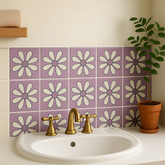
Why Repeating Tile Patterns Make a Home Feel More Artistic and Personal
A repeated tile pattern can change an ordinary surface into a carefully composed part of the architecture. One decorative tile may be attractive on its own, but its real potential becomes visible when several pieces create rhythm, movement, and a larger visual structure. The installation begins to function less like a basic wall covering and more like permanent artwork.
Repeating patterns are particularly effective in homes because they combine order with individuality. Repetition gives the eye a recognizable sequence, while color, placement, scale, and handmade variation prevent the surface from feeling impersonal. The same tile can produce a formal fireplace surround, a relaxed kitchen backsplash, or a vibrant courtyard depending on how it is arranged.
Mexican pattern tiles offer especially rich possibilities. Geometric motifs, painted florals, Talavera-inspired designs, borders, and modular compositions can be adapted to Spanish, Mediterranean, Hacienda, eclectic, and contemporary interiors. When individual pieces are made or decorated by hand, subtle differences add another level of character.
Understanding how repetition works helps homeowners and designers create spaces that feel expressive without becoming visually chaotic. The goal is not pattern for its own sake, but a composition connected to the people, architecture, and daily life of the home.
Repetition Turns Decoration into Visual Structure
Repetition is one of the fundamental principles of design. A recurring shape, line, or color gives separate elements a shared identity. In tilework, repetition transforms individual ceramic units into a continuous field.
This process creates visual structure. The eye recognizes where the pattern begins, how it progresses, and whether it changes direction. Even a complex motif becomes understandable because its essential elements recur at regular intervals.
Architectural materials already depend on repetition. Floorboards create parallel lines, bricks form ordered courses, and ceiling beams establish a sequence across a room. Pattern tile builds on this familiar logic while adding ornament and color.
The resulting surface can reinforce the proportions of the architecture. Horizontal repetition makes a backsplash or border appear longer. Vertical arrangements can emphasize height. Diagonal patterns introduce movement, while centered medallions establish symmetry and focus.
Because the pattern is installed rather than simply placed in the room, it becomes part of the home’s visual framework. This permanence gives it greater influence than many decorative accessories.
Why Repeated Patterns Feel Artistic
Art does not require a single isolated image. Many artistic traditions use repeated forms to explore balance, symbolism, variation, and movement. Textile weaving, carved screens, mosaics, printed papers, and architectural friezes all rely on repetition.
Tile patterns operate in a similar way. A motif can be complete within one tile, or several tiles can form a larger image. Four pieces may create a star, flower, or circular medallion. When this unit repeats, secondary shapes emerge between the primary motifs.
This layered effect rewards observation. From a distance, the viewer sees the overall rhythm. At close range, brushwork, glaze, color transitions, and individual details become visible. The surface offers more than one level of experience.
Repeating tile is also responsive to its setting. Light reflects from glazed surfaces, shadows reveal relief, and grout lines influence how the pattern is read. The composition changes subtly as daylight moves through the room, giving it a visual life that flat printed decoration may not provide.
Pattern Creates Personality Through Selection
A pattern becomes personal because someone has chosen it for a particular place. The motif, palette, scale, and layout all communicate preferences. A blue geometric backsplash feels different from a multicolor floral one, even if both occupy the same dimensions.
Homeowners may select a design that recalls a family home, a meaningful trip, or a cultural tradition. Others may simply respond to a certain combination of colors or to the balance of a geometric repeat. Both approaches create an emotional relationship with the material.
Pattern can also express how the occupants want a room to feel. Structured geometry can create a sense of order. Botanical forms may make a kitchen or bathroom feel softer. Mixed patterns communicate informality and variety, while one repeated motif often feels calm and intentional.
The most personal interiors do not need every surface to be unusual. One carefully considered tile installation can give an otherwise restrained home a recognizable identity.
Handmade Variation Prevents Repetition from Feeling Mechanical
Perfect repetition can become visually flat if every unit is identical. Handmade tiles introduce subtle differences that keep the pattern active without destroying its order.
Painted lines may vary slightly in width. One area of glaze may be deeper or more translucent than another. Pigments can shift in concentration during application and firing, while edges may show small dimensional differences.
Across a complete installation, these characteristics produce controlled variation. The pattern remains consistent enough to create rhythm, but individual tiles do not disappear into mechanical sameness.
This balance is central to the appeal of handmade Mexican and Talavera-style tiles. The viewer can recognize both the established motif and the contribution of the artisan. Each tile belongs to the group while retaining a degree of individuality.
Natural variation should be distributed deliberately before installation. Opening several boxes and arranging the pieces in advance prevents darker, lighter, or more visibly irregular tiles from clustering accidentally.
How Geometry Influences the Mood of a Room
Geometric tile patterns can make a space feel ordered, energetic, expansive, or intimate depending on how their lines are arranged.
Square and grid-based motifs reinforce stability. They align naturally with cabinets, counters, windows, and other rectangular architectural elements. Repeated stars or circles soften the grid by introducing shapes that extend across tile boundaries.
Diagonal lines create stronger movement. They guide the eye across the surface and can make a small backsplash feel more dynamic. In larger areas, a diagonal repeat can establish a woven or lattice-like effect.
Curved geometry produces a gentler rhythm. Interlocking circles, waves, and rounded medallions can balance straight cabinetry, masonry, and angular furniture. They are particularly effective in rooms with arches or other curved architectural features.
Highly detailed geometry needs quiet surroundings. If flooring, counters, textiles, and wall tile all contain competing movement, the room may lose its visual hierarchy. Pattern is most effective when it has enough space to be understood.
Floral and Botanical Patterns Add Expressive Warmth
Floral motifs bring organic form to surfaces made from rigid ceramic units. Leaves, vines, petals, and stylized blossoms soften hard architectural materials and introduce references to nature.
In kitchens, floral tiles can create a welcoming contrast with cabinets and appliances. In bathrooms, they can add warmth to stone, porcelain, and metal fixtures. Outdoor applications allow the pattern to connect directly with gardens and planted courtyards.
Botanical motifs do not need to be highly realistic. Traditional tile patterns often simplify natural forms so they can repeat clearly. This stylization gives the design structure and prevents it from appearing like a printed picture divided into squares.
Pattern scale affects the mood. Small floral repeats feel detailed and intimate, while large medallions make a stronger architectural statement. A narrow border of vines can frame an area without covering the complete surface.
Color Repetition Connects Separate Areas of the Home
A repeated pattern creates unity within one installation, but repeated colors can create continuity throughout the home. The same blue might appear in an entry panel, kitchen backsplash, and outdoor fountain even if each area uses a different motif.
This approach allows rooms to have individual identities while maintaining a shared design language. Exact duplication is unnecessary. A cobalt-dominant kitchen tile can relate to a softer blue-and-white bathroom pattern through color rather than motif.
Smaller accents can reinforce the relationship. A green used in Talavera tile might reappear in upholstery, painted furniture, plants, or artwork. Yellow can connect to brass, warm lighting, or textiles, while terracotta pigments relate naturally to wood, leather, and clay floors.
Limit the number of dominant colors. A pattern containing five or six pigments does not require every color to be repeated throughout the room. Select one primary tone and one or two supporting accents for a composition that feels connected without becoming overly coordinated.
Repeating Patterns Can Clarify Architectural Features
Pattern does more than decorate a wall. It can indicate where one architectural element begins and another ends. Borders outline fireplaces, backsplashes, mirrors, doorways, and fountains. Patterned risers distinguish the vertical movement of a staircase.
A repeated tile panel behind a range creates a focal point within a long kitchen wall. A tiled niche draws attention to depth. On a patio, a framed floor pattern can define an outdoor dining area much like a rug.
This ability to clarify space is especially useful in open-plan homes. A patterned tile surface can identify the kitchen, bar, or fireplace area without adding physical partitions.
Pattern can also correct visual imbalance. A tall tile panel emphasizes ceiling height, while a wide horizontal band helps lengthen a short wall. Centered motifs can strengthen symmetry around a range, vanity, or fireplace.
Kitchen Backsplashes as Permanent Art
The backsplash is one of the most effective locations for a repeating tile pattern because it is both functional and highly visible. It protects the wall while introducing color and detail near eye level.
A full patterned backsplash works well with simple cabinetry and restrained counters. Geometric designs can sharpen a contemporary kitchen, while floral or multicolor Mexican tiles support Spanish, Mediterranean, and Hacienda interiors.
For a more concentrated composition, use patterned tile behind the range and quieter field tile elsewhere. A border can frame the design, giving the panel the presence of built-in artwork.
Pattern alignment should respond to the cabinetry and hood. Center major motifs on the range, and consider how outlets, shelves, or pot fillers will interrupt the repeat. A scaled elevation helps identify these issues before installation.
If several coordinating patterns will be mixed, create a complete dry layout. Distribute dominant colors evenly and preserve a clear relationship between the tiles. Mixed does not need to mean random.
Bathrooms Offer Controlled Opportunities for Pattern
Bathrooms are relatively contained, allowing a pattern to establish a strong identity without affecting every area of the home. A vanity wall, shower niche, border, or wainscot can provide enough surface for repetition to become visible.
In a powder room, a full patterned wall can create a memorable experience. Because the room is used for shorter periods, it can often support more visual intensity than a primary bathroom.
In larger bathrooms, pattern can identify one functional zone. Decorative tile behind a vanity distinguishes it from the shower, while a patterned niche adds detail within a field of solid tile.
The product must be appropriate for its application. Decorative wall tile should not automatically be used on floors or in continuously wet conditions. Water exposure, slip resistance, glaze characteristics, substrate, waterproofing, grout, and sealing requirements need to be reviewed before installation.
Fireplace Patterns Establish a Visual Center
A fireplace naturally organizes the furniture and circulation of a living room. Repeating tile reinforces this role by giving the feature color, texture, and a clearly defined frame.
One motif repeated across the surround creates formality. Mixed coordinating tiles produce a more relaxed, collected character. Solid-color tile can separate complex patterns or provide a quieter transition to the mantel.
The shape of the fireplace should guide the layout. A tall surround can emphasize vertical repetition, while a wide firebox may benefit from a broader horizontal pattern. Borders help resolve edges and provide a transition to plaster, wood, or stone.
Fireplace applications require technical planning. The tile, substrate, setting material, grout, clearances, and complete construction assembly must be appropriate for the expected heat and applicable building requirements.
Stair Risers Turn Repetition into a Sequence
On a wall, a pattern is viewed as a continuous field. On stair risers, it unfolds one step at a time. This makes the installation feel like a sequence connected to movement through the home.
Repeating one tile on every riser creates consistency and formality. Alternating several coordinating patterns adds variety while preserving order through shared colors or backgrounds.
Plan the sequence before installation. Arrange every riser, distribute stronger colors, and photograph the approved order. This reference helps the installer maintain the intended composition.
The treads should generally remain quieter so they do not compete with the risers. Wood, stone, or floor-rated solid tile can provide contrast while addressing wear and traction requirements.
Patios and Courtyards Support Larger Pattern Statements
Outdoor living areas can accommodate bolder color and larger repeats because natural light and broader dimensions give patterns more visual space.
Repeating tiles can define an outdoor kitchen, cover the face of a built-in bench, decorate stair risers, or create a focal panel on a courtyard wall. Fountain interiors and surrounds are especially effective locations for blue, green, and multicolor Mexican designs.
A patterned “rug” set into a patio floor can organize an outdoor dining or seating area. A border defines the perimeter while the repeated field establishes a destination within the larger paved surface.
Exterior installations require products and setting systems appropriate to climate and exposure. Direct sunlight, standing water, temperature changes, freeze-thaw cycles, movement, and mineral deposits can all affect performance. Confirm suitability before ordering rather than assuming every decorative tile can be used outdoors.
How to Mix Patterns Without Creating Visual Confusion
Mixing repeated patterns can make a home feel layered and personal, but the designs need a common element. This may be a shared background color, border pigment, pattern scale, or geometric structure.
One effective method is to combine patterns