


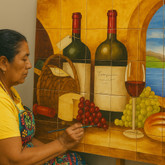
Why Every Talavera Piece Is Unique: Understanding Variation in Handmade Tiles, Sinks, and Ceramics
Talavera ceramics are defined by their individuality. Whether in the form of tiles, sinks, or decorative pieces, each item carries subtle variations in color, pattern, and finish. These differences are not production flaws—they are the natural result of a fully handmade process rooted in centuries of tradition. Understanding why these variations occur is essential to appreciating the true value of Talavera and what sets it apart from mass-produced materials.
In a market where uniformity is often expected, Talavera offers something fundamentally different: authenticity. Each piece reflects the human hand, the natural properties of the materials, and the traditional techniques used in its creation. This article explores the reasons behind these variations and explains why they are an integral part of Talavera’s uniqueness.
The Nature of Handmade Craftsmanship
Talavera production is entirely artisanal. From shaping the clay to applying the final glaze, every step is performed manually by skilled artisans. Unlike industrial processes, where machines replicate identical outputs, handmade ceramics rely on human technique, which naturally introduces variation.
Each artisan brings their own rhythm, pressure, and interpretation to the process. Even when following the same design, no two pieces will be identical. This is not a limitation—it is a defining characteristic of the craft.
Variations in Color: A Result of Natural Materials
The colors seen in Talavera ceramics are created using mineral-based pigments. These pigments interact with the glaze and the kiln’s heat during firing, producing the final tones and finishes.
Several factors influence color variation:
- Differences in pigment composition
- Hand application of color
- Temperature fluctuations within the kiln
- Position of the piece during firing
Because of these variables, even tiles or sinks from the same production batch may display slight differences in shade or intensity. These tonal shifts contribute to the richness and depth of the final installation, creating a surface that feels dynamic rather than flat.
Variations in Design: The Human Element
Every Talavera piece is hand-painted, which means that patterns are interpreted rather than mechanically reproduced. While artisans follow established designs, each brushstroke is applied individually.
This results in variations such as:
- Slight differences in line thickness
- Minor shifts in pattern alignment
- Unique brushstroke textures
- Subtle asymmetries in motifs
These variations are not mistakes—they are evidence of the artisan’s hand at work. They give each piece its own identity, ensuring that no two tiles or sinks are exactly alike.
The Role of the Kiln in Final Results
The firing process is one of the most influential stages in Talavera production. Pieces are placed inside kilns where temperatures can vary slightly depending on location and airflow.
These variations affect how the glaze melts and how pigments develop, leading to differences in color tone, surface texture, and finish. Even under controlled conditions, no two firings will produce identical results.
This unpredictability is part of what makes Talavera ceramics so distinctive. It ensures that each piece is truly one of a kind.
Material Behavior and Natural Variation
The clay used in Talavera production is a natural material, and its properties can vary from batch to batch. Factors such as mineral content and moisture levels influence how the clay behaves during shaping, drying, and firing.
These differences can result in subtle variations in size, thickness, and surface texture. When combined with the effects of handcrafting and firing, they contribute to the overall uniqueness of each piece.
Why These Variations Are Not Defects
In industrial manufacturing, consistency is the primary goal. However, in traditional ceramics, variation is a sign of authenticity. Talavera pieces are valued precisely because they are not identical.
These differences should be understood as part of the material’s character. They add depth, movement, and visual interest, especially when multiple pieces are installed together.
A wall of perfectly identical tiles can appear flat and artificial. In contrast, a Talavera installation feels alive, with subtle shifts in color and pattern that create a more engaging visual experience.
Applications Across Tiles, Sinks, and Decorative Pieces
The same principles apply to all Talavera products, whether they are tiles, sinks, or decorative items. Each piece undergoes the same handmade process, resulting in consistent variation across different product types.
For tiles, this variation creates dynamic surfaces in backsplashes, walls, and floors. For sinks, it ensures that each fixture becomes a unique focal point within a bathroom or kitchen. Decorative pieces benefit from this individuality by standing out as artistic elements within a space.
Designing with Talavera: Embracing Uniqueness
When working with Talavera, it is important to embrace variation rather than resist it. Designers often use these differences to create depth and character within a space.
Careful planning during installation—such as mixing tiles before placement—helps distribute variations evenly, resulting in a balanced and cohesive design. The goal is not uniformity but harmony.
This approach allows the natural beauty of the material to shine, enhancing both traditional and contemporary interiors.
The Value of Authentic Talavera
Choosing Talavera means choosing authenticity. Each piece represents a combination of tradition, skill, and natural material behavior. This is what gives Talavera its lasting appeal and distinguishes it from mass-produced alternatives.
By incorporating these ceramics into your space, you are not only adding visual interest but also supporting a craft that has been preserved for generations.
Explore Authentic Talavera Pieces
If you are interested in incorporating these unique elements into your project, you can explore our collection of Mexican Talavera products to find tiles, sinks, and decorative pieces that reflect this tradition.
For questions about product selection, variations, or how to integrate Talavera into your design, we invite you to contact our team. We are here to provide guidance and help you make informed decisions.
Conclusion: Uniqueness as a Defining Feature
Every Talavera piece tells its own story. The variations in color, design, and finish are not imperfections but expressions of craftsmanship, material, and tradition.
By understanding and embracing these characteristics, you gain a deeper appreciation for what makes Talavera truly special. The result is a space that feels authentic, dynamic, and rich in cultural meaning—defined not by uniformity, but by individuality.