


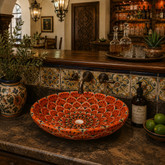
The Artisan Story Behind Hand Painted Mexican Talavera Bathroom Sinks
Hand painted Mexican Talavera bathroom sinks are more than functional fixtures. They are the result of centuries of ceramic tradition, artisan skill, and cultural craftsmanship preserved through generations. Every sink reflects a process rooted in history, where clay, mineral pigments, glazing techniques, and hand-painted decoration come together to create pieces that are both practical and artistic.
Unlike mass-produced bathroom sinks created through industrial manufacturing, Talavera sinks carry visible signs of human craftsmanship. The brushstrokes, subtle variations in color, and individuality of each design give these pieces emotional warmth and authenticity. In luxury interiors, rustic homes, Spanish Colonial spaces, and contemporary bathrooms alike, hand painted Talavera sinks introduce a sense of artistry that transforms ordinary bathrooms into spaces filled with character.
Understanding the artisan story behind these sinks reveals why they continue to be valued not only for their beauty, but also for the cultural heritage and craftsmanship they represent.
The Origins of Talavera Craftsmanship
The story of Talavera ceramics begins centuries ago with the blending of indigenous Mexican pottery traditions and Spanish ceramic techniques introduced during the colonial period. Over time, artisans refined these methods into a distinctive form of handcrafted ceramic art known today as Talavera.
This tradition became deeply connected to regions known for ceramic production, where artisans passed techniques from one generation to another. The production of Talavera sinks evolved naturally from this ceramic heritage, adapting traditional craftsmanship into functional bathroom fixtures suited for modern interiors.
Even today, authentic Talavera production remains highly dependent on handwork. The process has changed very little compared to the methods used generations ago, preserving the authenticity that makes these pieces so unique.
From Clay to Ceramic Form
Every Talavera sink begins with natural clay. This clay is carefully prepared to achieve the correct texture and consistency needed for shaping. Artisans work the material by hand, ensuring that it is free from impurities and suitable for firing.
The sink itself is then formed using molds or hand-shaping techniques. At this stage, the proportions and silhouette of the sink begin to emerge. Whether oval, round, rectangular, or vessel style, the form must balance aesthetics with functionality.
Because this process is manual, slight variations naturally occur between pieces. These differences are part of what gives Talavera sinks their individuality and handcrafted identity.
The First Firing Process
After the sink has been shaped, it is left to dry naturally. This step is critical because moisture must evaporate slowly to prevent cracking during firing.
Once dried, the ceramic undergoes its first kiln firing. This transforms the raw clay into a hardened ceramic body capable of receiving glaze and decoration. The firing process also influences the final texture and structure of the sink.
The kiln itself plays an important role in the uniqueness of Talavera ceramics. Slight differences in heat distribution can subtly affect the final appearance of the piece, contributing to variations that are impossible to reproduce mechanically.
The Art of Hand Painting
The most recognizable part of a Talavera sink is its hand-painted design. This stage is where craftsmanship becomes artistic expression.
Artisans use mineral-based pigments to paint intricate patterns directly onto the ceramic surface. Floral motifs, geometric designs, scrollwork, and traditional Mexican patterns are among the most common decorative elements.
Every brushstroke is applied manually. Even when artisans follow the same design template, no two sinks are exactly alike. Slight differences in line movement, color intensity, and spacing give each piece its own personality.
This is one of the most important distinctions between handmade Talavera sinks and factory-produced ceramic products. Machine-made sinks may imitate patterns, but they cannot recreate the organic rhythm and variation of hand-painted artistry.
Glazing and Final Firing
After the painting is complete, the sink receives a protective glaze. This glaze creates the glossy finish associated with Talavera ceramics while also protecting the painted surface from moisture and everyday use.
The sink is then fired again at high temperatures. During this final firing, the glaze melts and permanently bonds with the ceramic body. The mineral pigments react with the heat, developing the rich and vibrant colors that define authentic Talavera.
The result is a sink that is both durable and visually expressive. The glossy surface reflects light beautifully, enhancing the depth and movement of the hand-painted design.
Why No Two Talavera Sinks Are Exactly the Same
One of the defining characteristics of hand painted Talavera sinks is variation. Because every piece is made and painted by hand, slight differences in pattern, brushstroke, color tone, and glaze movement are natural.
These variations are not flaws. They are signs of authenticity and artisan craftsmanship. In fact, many homeowners and interior designers specifically seek handmade Talavera because it avoids the uniform appearance of industrial production.
Each sink becomes a one-of-a-kind piece that carries the presence of the artisan behind it.
The Emotional Impact of Handmade Bathroom Fixtures
Bathrooms are increasingly designed as personal spaces rather than purely functional rooms. Handmade Talavera sinks contribute to this shift by introducing warmth, artistry, and individuality.
A colorful Talavera sink immediately changes the atmosphere of a bathroom. It creates a focal point that feels expressive and welcoming rather than sterile or generic. The handcrafted nature of the sink also creates a stronger emotional connection to the space.
This is especially important in luxury interiors, where homeowners often seek materials that feel authentic and meaningful rather than mass-produced.
Talavera Sinks in Interior Design
Spanish Colonial and Hacienda Interiors
Talavera sinks naturally complement Spanish Colonial and Hacienda-style homes. Their patterns, colors, and handcrafted surfaces reinforce the warmth and historical character of these interiors.
Modern Rustic Bathrooms
In modern rustic spaces, Talavera sinks add color and texture while balancing natural wood, stone, and metal materials.
Contemporary Design
Even minimalist bathrooms benefit from Talavera sinks. In contemporary interiors, a colorful hand-painted sink can act as a sculptural centerpiece within a restrained palette.
The Cultural Value Behind Talavera Sinks
Part of the appeal of Talavera lies in its cultural significance. These sinks represent generations of artisan knowledge and ceramic tradition preserved over centuries.
Owning a Talavera sink means incorporating a piece of Mexican craftsmanship into the home. The sink becomes more than a fixture; it becomes part of a broader artistic and cultural story.
This cultural depth is one reason why Talavera sinks remain timeless despite changing design trends.
Balancing Functionality and Artistry
While Talavera sinks are visually expressive, they are also designed for practical everyday use. Their glazed ceramic surfaces resist moisture and are relatively easy to maintain when properly cared for.
Many Talavera bathroom sinks also include integrated overflow holes, combining traditional craftsmanship with modern functionality. This balance between utility and artistry is part of what makes these sinks so valuable in interior design.
Choosing the Right Talavera Sink
When selecting a Talavera sink, homeowners should consider the relationship between color, pattern, and the surrounding materials within the bathroom. Brightly colored designs can create dramatic focal points, while softer palettes provide a more subtle elegance.
You can explore our collection of Mexican Talavera bathroom sinks to discover handcrafted designs for traditional and contemporary interiors.
You can also browse our complete collection of Mexican ceramics and tiles for coordinating decorative elements.
For assistance selecting the right sink for your project, you can contact our team for personalized guidance.
Conclusion: A Story Told Through Craftsmanship
Hand painted Mexican Talavera bathroom sinks represent more than decoration. They are the product of history, artisan tradition, and cultural identity expressed through clay, color, and hand-painted design.
Their variations, brushstrokes, and vibrant finishes remind us that true craftsmanship cannot be replicated by machines. Every sink carries the story of the artisan who shaped and painted it, bringing warmth, authenticity, and artistry into the home.
In a world increasingly dominated by uniform production, Talavera sinks stand apart as meaningful objects that transform bathrooms into spaces filled with personality and cultural richness.